Selecting the best winter hiking gear may seem an easy task. It’s just the usual clothes you take plus more warm clothes, right?
It’s not quite that simple. But don’t worry, this article is your guide to cold weather gear including what layers to wear in winter, and all the way down to the best cold weather hiking accessories.
The reality of hiking during the winter season is more complicated since there’s a lot to think about before heading outdoors.
This articles includes all the information you need to make your list of essential winter hiking clothing that will leave you warm, dry, and comfortable on the trails.
To help you enjoy the outdoors even in cold weather, this guide narrows down what to wear for winter hiking and snowshoeing.

You will require a few key pieces of apparel to keep you warm during winter hikes. Two vital things to remember about hiking in wintry weather are layering and traction.
This article covers details about all the key clothing layers you’ll need, plus how to get great traction on icy surfaces.
Keep in mind that during winter it’s likely that you’ll have to tackle some challenging conditions.
The terrain is more technical during wintry conditions, due to ice and snow on the trail. Also, the weather is often unpredictable, and this could make navigation more challenging.
However, winter doesn’t mean the hiking season is over.
There’s no such thing as bad weather, only unsuitable clothing – Alfred Wainwright
Explore This Guide:
Layering for Winter Hiking and Snowshoeing
Dressing in layers allows you to remain and dry and warm yet comfortable while enjoying the outdoors.
Start out your hike wearing essential winter clothing layers and remove layers when you begin to feel too warm.
Layering allows that when exerting and generating body heat, you can adjust the layers to match your current level of physical activity and body warmth.
Now, let’s go over the basic layers and clothing options for winter outdoor activities.

Base Layer for Hiking in Winter
The purpose of the base layer is to trap a thin heat layer against the body and if you sweat a bit it wicks the moisture away.
Certain fabrics wick moisture better than others. You should avoid cotton fabrics as they hold the moisture rather than release it. Wool is the optimum material for a base layer.
Some of the best moisture wicking fabrics are merino wool, polyester, and polypropylene. One of the best base layers is long underwear made from merino wool. It’s softer than traditional wool fabric but still has all the advantages of wool – moisture wicking, breathable, static resistant, and an excellent thermal insulator.
You want to wear a base layer that has all the best features, for instance Icebreaker merino wool – I have the long sleeve top and the leggings. They feel soft on the skin, and they’re machine washable.
Mid-layer for Hiking in Winter
Next the mid-layer offers a bulk of insulation, trapping the heat that your body generates to ensure you are warm.
One of the most common midlayers is a synthetic puffy jacket. Some people like to use a combination of fleece and a light puffy jacket. If there is any chance of precipitation you are wise to choose the synthetic puffy jacket because they are designed to provide the qualities of down, but still retain these qualities even when wet. While down loses its insulation qualities when it gets wet.
The midlayer is essential because your body heat changes while you hike, and you’ll want a fabric that is warm yet breathable. Also, think about design – how many pockets and how big are they? And do you want a hooded jacket?
Outer Layer for Hiking in Winter
Finally, the outer layer consists of a windproof and waterproof external shell. Look for Gore-Tex type fabrics which feature waterproof shell yet breathable jackets so you don’t get too sweaty.
Arcteryx Beta AR jacket is on the pricey side. Mountain Hardwear is more affordable. The women’s stretch Ozonic jacket by Mountain Hardwear gets great reviews and it comes in a variety of colors.
It ensures you block the wind and keep off external moisture. Keep in mind that the wind accelerates the cooling process just like water.
When selecting the size for your outer layer make sure it will fit over your other layers of clothing without feeling too tight or restricting movement. A bit too big is better than a bit too small.
I have a waterproof rain jacket that is size XL but it works great, I can wear it over my puffy jacket easily.
You should have a waterproof and windproof external shell in your pack, even if it’s not windy or rainy when you set out on your hike. My worst hiking experiences usually involve insufficient layering. I’ve learned the hard way that you should ALWAYS bring rain gear.
Although you may begin a hike when the day is calm and clear it’s crucial to have an outer layer in your gear bag. You want to be prepared for all types of weather.
Staying warm and dry are keys to survival outdoors. Hypothermia occurs when your body loses heat faster than it can produce heat.
Always be prepared for all kinds of weather!
Winter Hiking and Snowshoeing Pants
The right pants are essential winter gear to protect you from cold, wind, and precipitation. A good pair of hiking pants allows you to feel comfortable while still offering flexibility and ease of movement.
Wearing the right gear is the key to comfort in cold weather.
While purchasing winter hiking pants, you should ensure they are at least wind and water-resistant. But waterproof and windproof pants may offer you the best solution if you’re hiking in wet, cold, and windy conditions.
While hiking in rainy climates bring a pair of lightweight rain pants to wear on top of your hiking pants or leggings. For cooler rainy days, a pair of softshell pants with fleece lining will keep you warmer.
Columbia women’s Storm Surge rain pants, and also the Columbia men’s rain pants are highly rated.
I also love Patagonia brand because they make awesome products, give back to the planet, and have an excellent guarantee for all their products.
If you already own a pair of insulated ski pants these will do for hiking and snowshoeing in colder weather, but you may find they are too warm. The best choice is lightweight breathable rain pants.
Women’s Waterproof Pants for Hiking
Sometimes (most of the time!) it is difficult to find a great fit when shopping for women’s hiking pants, especially for plus size hiking pants.
You can find waterproof pants for women that are fleece lined, insulated, and made from stretch fabric for an excellent fit while keeping you toasty warm and dry.
A great pair of waterproof pants is indispensable.
Winter Hiking Footwear
If you can keep your feet happy you’ll have a better hike :)
Choosing the right footwear is as critical as the other essential winter hiking gear. The right boots or hiking shoes give you traction on the trail and help keep your feet from getting cold and wet.
In addition to great footwear, you can enhance your comfort level with the best hiking socks to keep your feet warm and accessories to give your hiking shoes better traction.
Wool socks
Wool socks should be near the top of your winter hiking gear list. A couple of pairs of wool socks will help keep your feet comfy and warm.
I love the quality and designs of SmartWool socks and Darn Tough socks. Sometimes I wear a pair of shorter crew socks over my longer pair of socks.
Many winter hikers opt for heavier wool socks compared to the rest of the year. However, it all depends on your personal preferences, one thick pair versus two thinner wool socks.
If you plan on wearing two pairs of wool socks keep this in mind when buying your winter boots. The thicker the socks, the more insulated you are, but make sure that the boots are not too tight.
While packing your gear for a hike, it’s not a bad idea to add an extra pair of socks.
Hiking Boots for Winter
You can usually get away with using your waterproof summer hiking shoes on the not so freezing cold days. But the best choice is waterproof insulated boots when hiking in cold temps.
Make sure you buy 100% waterproof boots and not simply water resistant. If you’re feet get wet and cold your splendid outing could turn to miserable real fast.
I bought a pair of Wind River Ice Queen insulated waterproof boots and they have served me well. I’ve used them for snowshoeing, hiking, and walking around the city on cold days.
If you’re hiking in an area that gets more rain and not so much cold or snow then you should do well with the Merrell Moab waterproof hiking boots.
Gaiters for Snowshoeing and Hiking in Winter
Despite having waterproof boots, you may find it necessary to wear a pair of gaiters.
Wearing gaiters closes the gap at the top of your footwear to prevent you from getting snow in your boots or hiking shoes.
If you’re hiking on packed snow or when the snow isn’t deep then gaiters aren’t necessary but in deeper snow you will want to wear gaiters.
Gaiters are a useful hiking accessory, but no need to spend a lot, cheap gaiters will do the job.
Crampons and Microspikes
Have you ever fallen flat on your behind while walking on an icy patch of trail? Me, for sure yes. Too many times!
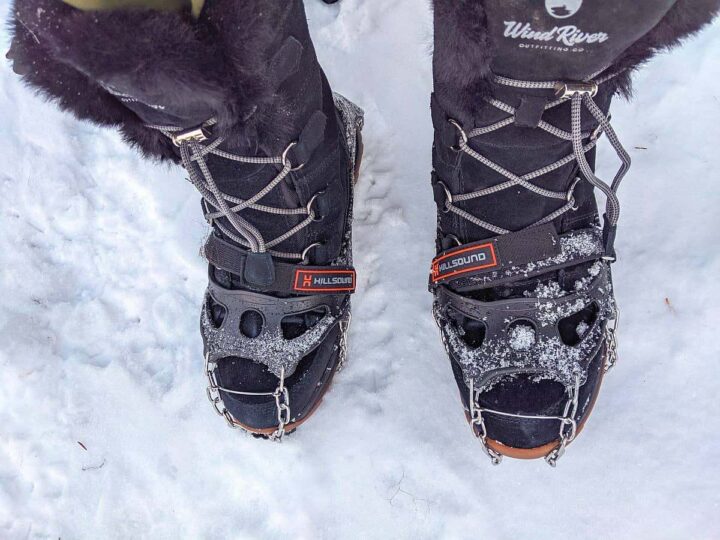
Let me introduce you to crampons and microspikes. I bought these Hillsound crampons and a pair of cheap microspikes and they’ve proven their worth immediately. Kahtoola nanospikes are very popular.
Both microspikes and crampons have metal spikes that grip into ice surfaces and stop you from slipping and sliding all over the place. Typically they’re made with a sort of rubber harness that you slide over your footwear.
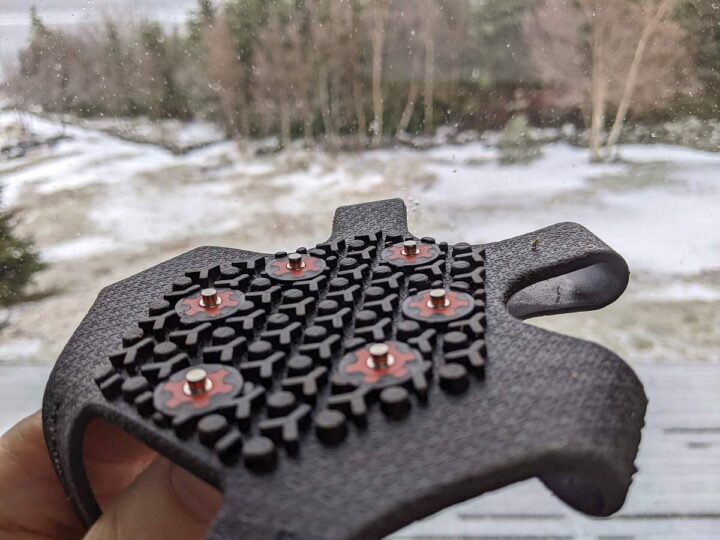
Maybe those boots you bought have great treads, but the moment you put on microspikes, you will appreciate superior traction. Even my Wind River Ice Queen boots brag of good traction on ice, but they’re simply not up to the task. I love my microspikes!
Ice cleats are a cheap option and I’ve used them walking around city trails and sidewalks. The ice cleats are attached to a thick elastic band that you pull over your shoes.
The icy, slippery conditions can change from unwalkable to an enjoyable hiking experience due to wearing the right gear.
Microspikes and crampons are a game changer when it comes to getting traction on winter trails.
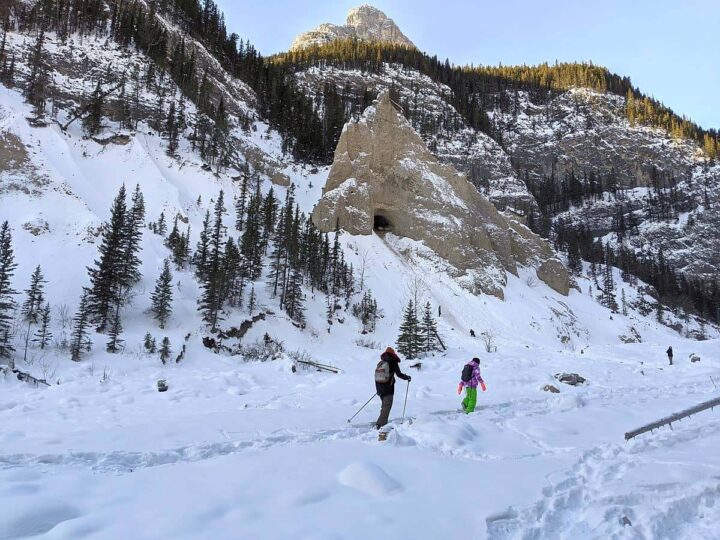
I’ve easily hiked in areas that were completely covered in ice for long stretches of the trail, for instance Grotto Canyon winter hike in Alberta.
Snowshoeing and Winter Hiking Accessories
As you plan to pack the basics, remember that accessories are essential gear for winter outings. For instance, winter hat, mittens, gloves, sunscreen, sunglasses, fleece, etc. And a waterproof backpack to put everything into.
So, alongside the clothing layers, think about the extras you want to bring along and add these to your hiking packing list.
Fleece Buff or Scarf
Keep your neck and face warm with a fleece scarf or buff (neck gaiter) that feels soft against your skin. Merino wool is another good choice, though I’ve yet to find one that doesn’t feel too itchy on my neck.
A buff is great because it’s not going to get loose or fall out of place like a scarf will sometimes manage to do.
Balaclava
If you’re outdoors in freeze-your-face-off winds combined with cold weather, you will be thankful to have a balaclava in your hiking kit. When it’s so cold you feel the icicles forming on your eyelashes it’s balaclava time!
If you do a lot of skiing you probably already own one.
My friend always gets balaclava mixed up with baklava (a Greek desert) and now I can’t say balaclava without thinking about baklava!
Winter Hats (Toques)
I’m from Canada and toque is the name for what Americans call a winter hat, beanie, or knit cap.
Whatever you like to call it, you need a nice warm head covering when you’re out on the trails in cooler weather. I like to bring a lightweight fleece toque and a bigger wool toque with ear flaps. Mine is from Nepal but I bought it in Nova Scotia and it’s the best toque ever!
Gloves and Mitts
Bring a pair of gloves or mitts (or both) to keep your hands warm.
The best pair of gloves should include an inner insulating wool liner and an insulated outer glove with a waterproof shell.
Note that mittens will offer more warmth than gloves, though gloves do offer more dexterity.
A great solution is to wear an insulated glove inside waterproof shell mitts, so you have both warmth and dexterity when needed.
Trekking Poles
Trekking poles can help you keep your balance and add support for your knees while on stairs or downhill trails. Buy a pair of trekking poles with various attachments that you can switch up for the type of terrain you’re hiking.
Bonus, your trekking pole could be just the right perch for a sweet little bird.

Sunscreen
Because it’s not as hot like summer season, winter hikers will often overlook the need for sunscreen.
Snow is a great reflector of sunshine, and your skin can still get sunburned in winter. Most avid skiers have experienced sunburn in winter at least once.
Remember that higher elevation means that the UV rays are more intense. You may experience sunburn faster if you are hiking in higher elevations than you might be accustomed to.
Sunglasses
Sunshine on snow covered terrain is shockingly bright. Sun blindness (photokeratitis) is real, and it is painful.
Even when the skies are overcast remember to bring UV protection sunglasses because UV rays don’t care if it’s sunny or cloudy! That’s why sunglasses are on the hiking essentials check list.
Which UV sunglasses are the best? You want sunglasses with UV 400 protection because UV 400 blocks nearly 100% of the sun’s harmful ultraviolet light rays.
Backpacking Stove
This is not necessarily essential for day hikes but when I saw a couple at Rawson Lake light up their little camping stove to heat up some hot chocolate, I was a little jealous! Okay, a LOT jealous!
A small backpacking stove such as the JetBoil Flash or MSR pocket rocket could bring a lot of joy to your winter adventures. And if you plan on doing any multi-day hikes you for sure want a good backpacking stove.
Packing Cubes
There’s a lot of stuff you need to bring for a cold weather hiking trip!
Packing cubes can help you better organize your gear inside your backpack. You can use packing cubes for all your travel organizing needs. They come in a variety of sizes.
Packing cubes help to compress your stuff down and keep your gear and food organized. You can use water resistant packing cubes or buy fully waterproof packing cubes to ensure everything stays dry.
Backpack with Rain Cover
And the final item you’ll need for winter excursions is a good backpack with a rain cover.
You probably don’t need anything different than you use for warm weather hikes. But be sure that you have a cover for your pack so that if it rains or snows you can keep all your gear dry. I have the Deutrer 28L and it’s just big enough for winter day hikes to hold my gear, water, and food.
Also keep in mind that winter clothing takes up more space than summer stuff so make sure your pack has enough room for all the necessary hiking clothes and accessories.
Top backpack brands include Arc’teryx, Deuter, Gregory, Marmot, North Face, Osprey and Patagonia. The right fit is super important when choosing a backpack and make sure you choose a backpack that suits your hiking needs, whether it’s backcountry outings, day hikes, or something in-between.
And that completes the list of what to wear for hiking in winter. When the days get shorter and the temperatures plummet, don’t abandon winter hiking and wait for spring. Buy yourself the perfect winter wardrobe for outdoor adventure and go hiking or snowshoeing!
Save this to Pinterest for later!