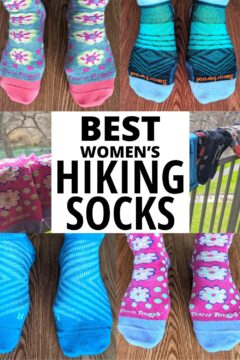
When you’re out hiking the trails great footwear and socks make your feet happy. And since the perfect way to ruin a good hike is to make your feet unhappy you’ll want to snuggle them into the best hiking socks you can find.
I’m always on the look out for great hiking socks. I want something comfortable, durable, moisture wicking, with a bit of cushioning (but not too much) that’s easy to wash/dry and cute designs are always a plus. For a while now I have always purchased merino wool socks with synthetic blend because they’re comfortable, and easy to care for, but I’ve noticed some brands or styles wear out quickly. So you have to be particular about which socks to buy to get the best value for your money.
Here’s my picks for best women’s hiking socks including a new brand that I really like (and one that I won’t be buying again).

Explore This Guide:
Features of the Best Hiking Socks
Some key positive features to keep in mind while shopping for socks include:
- Durability
- Comfort & Fit
- Wicking Capability
- Breathable
- No Itch Fabric
- Compression
- Cushioning and Padding
- Quick Drying
- Warmth
- Good Value for Money
- Lifetime Warranty
- Shipping Cost
- Eco-friendly Packaging
And some key negatives to watch out for when shopping for hiking socks:
- Poor fit
- Stitching or seams rubbing on foot
- Fabric not breathable
- Itchy fabric
- Slow to dry
- Wear out fast
- Too much synthetic fabric making them slippery
- Too expensive
- Foot odor
- Not enough padding
What type of fabric is best for hiking socks?
Wool socks have a lot of positive features (moisture wicking, breathable, static resistant, and an excellent thermal insulator) but they can wear out too fast, so I find that a wool and synthetic blend is the best option for hiking socks. Cotton absorbs water and that causes blisters really quick so avoid cotton. And I also avoid socks made with 100% synthetic fabric because they tend to be too warm in hot weather but not warm enough in colder weather. Wool insulates better so I prefer Merino wool and synthetic blend for the best overall performance.
Synthetic material dries faster than natural fibers and it’s more durable than wool, but Merino wool is warmer than synthetic fabrics so overall it’s best to buy socks made with wool and synthetic fabric for ultimate wear and comfort.

Crew Hiking Socks
Most of the time when I’m hiking I like to wear crew hiking socks because they cover the ankle and lower calf area to offer a bit of protection from getting scratched up by low lying twigs or brush. Ankle socks can also help avoid bug bites but I also wear bug spray when needed.
Darn Tough
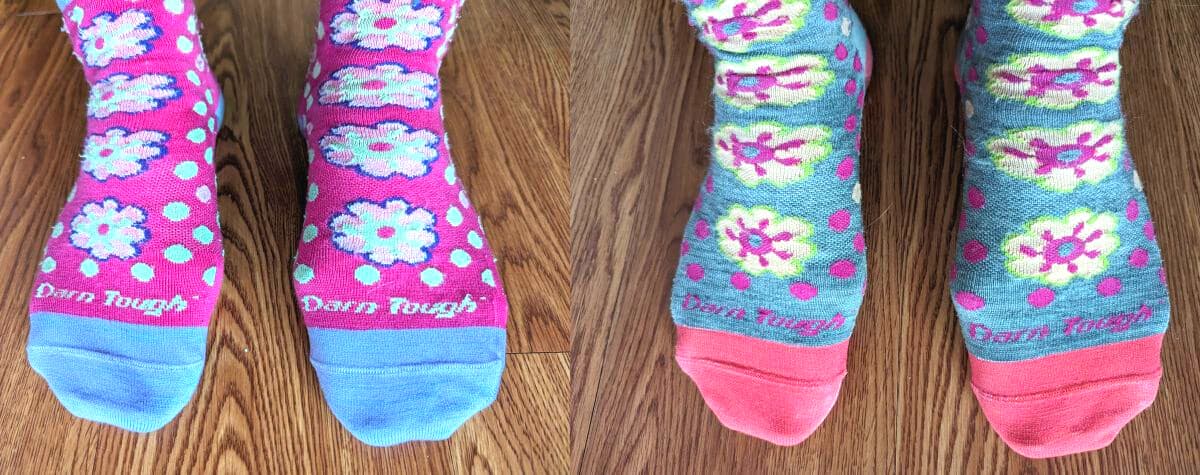
Darn Tough hiking socks are one of my favorite brands because of the variety of styles and designs of their hiking socks. They also boast a lifetime warranty (no receipt required) if the socks wear through and get a hole. Of course if you are already on a trail and need a new pair of socks that isn’t going to help you much but it’s great that they stand by their product. And it’s wise to carry at least one extra pair of socks in your backpack in case your socks do wear out or get wet while hiking.
Pros:
- Great design choices
- Available in lightweight, midweight, heavyweight
- Good moisture wicking
- Good cushioning
- Lifetime warranty
- Free shipping on orders over $50 on their website
- Made in USA (Vermont)
Cons:
- Expensive
- The main negative is that the socks do get threadbare after a while and the warranty only covers replacement if the socks get a hole in them. So, I can’t get a replacement pair unless I keep wearing the uncomfortable threadbare socks until they get a hole.
You can find Darn Tough socks at lots of outdoor retailers like REI, online on the Darn Tough website, or check your local outdoor stores.
Silverlight
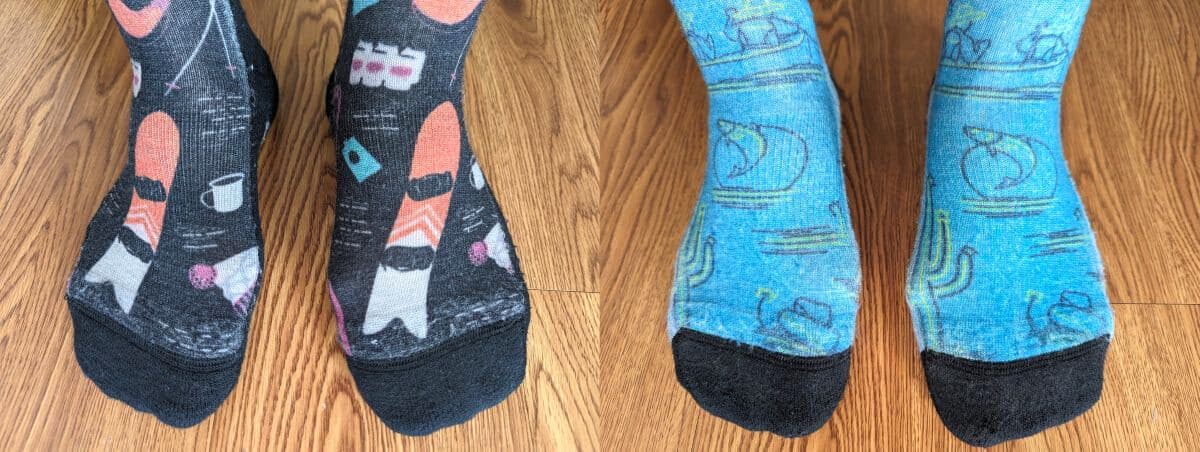
Recently I’ve been trying out Silverlight hiking socks, which are made of a mixture of Merino wool, nylon, silver fiber, and a small amount of Spandex. (Full disclosure: Silverlight sent me a free pair of socks to try out. However, I’m under no obligation to give them a favorable review. I only review items that I have used numerous times, and I only recommend products I will continue to use and feel the item is useful to my readers.)
Silverlight provides free shipping and boast a lifetime guarantee. Keep in mind though, if you want to return the socks you would have to pay shipping.
The fabric contents in Silverlight hiking socks is: 40% Nylon, 53% New Zealand Merino Wool, 5% Silver Yarn, 2% Spandex. This is why the socks have a great fit, moisture wicking, and keep your feet stink-free.
Indeed, the socks are genuinely stitched with silver fiber. Why is silver used? Because it inhibits bacteria, this technology is also utilized by astronauts and medical professionals. And actively preventing bacteria also prevents food odor. These socks are seamless and also have a bit of compression to help avoid blisters. I really like the fit of these socks.
I’ve been wearing these socks for hiking, walking, and around the house and I’m impressed, these are comfortable socks for all types of wear. I think the light compression really helps with comfort and the cushioning is very good at the heal and toe area. I’m pleasantly surprised that these socks are even more comfortable than my Darn Tough and Smartwool socks (when hiking in cooler weather). I find the Silverlight socks aren’t great for warmer weather, they make my feet sweat too much.
Get free shipping and lifetime warranty from Silverlight socks
Pros:
- Well cushioned
- Light compression
- Good moisture wicking
- Lifetime guarantee
- Free shipping world-wide
- Eco-friendly shipping packaging
Cons:
- Only 2 colors, and no design choices
- Too hot in warmer weather
- Expensive

Smartwool
Smartwool is another fav brand for hiking socks even though they don’t have the lifetime warranty like Silverlight and Darn Tough. This is probably one reason that Smartwool hiking socks are often a bit more affordably priced than Darn Tough or Silverlight.
Similar to Darn Tough brand you can find Smartwool hiking socks at dozens of outdoor shops, on the Smartwool website.
Pros:
- Good cushioning on the thicker socks
- Variety of designs and colors
- Very good moisture wicking
- Made in USA
Cons:
- Expensive
- Guarantee is only for 2 years
Ankle Socks for Hiking
I wear ankle socks for hiking when the weather is warmer and I also wear these around the house instead of slippers. You can use hiking socks when you’re wearing hiking shoes but they’re not suitable for hiking boots unless you are wearing them over a longer pair of socks, that’s what I wear for winter hiking.
Again, Merino wool + synthetic is my go-to fiber mix for hiking ankle socks because of all the positives: moisture wicking, breathable, static resistant, and an excellent thermal insulator.
Darn Tough
Darn Tough ankle socks are available in a variety of colors and designs and I’ve worn mine for years until the fabric is very thin at the back of the ankle. They haven’t worn through yet so I can’t send them back for replacement. I guess I’ll start wearing them over top another pair of socks on cooler days so I can get more wear out of them. The fabric is too worn out to wear these as my only hiking socks.
There are a lot of positives for Darn Tough socks and I will buy another pair or two soon. Even though I’ve never sent a pair back for replacement I do like the quality, durability, comfort, and designs available from Darn Tough brand socks.
Pros:
- Great design choices
- Good moisture wicking
- Good cushioning
- Lifetime warranty
- Free shipping on orders over $50 on their website
- Made in USA (Vermont)
Cons:
- Expensive
- Again the main negative is that the socks do get threadbare after a while and the warranty only covers replacement if the socks get a hole in them. So, you can use the threadbare socks over another pair of longer socks to get a little more wear out of them and if they ever get a hole you can send them back to Darn Tough for a replacement pair.
You can find Darn Tough socks at lots of outdoor retailers like REI, online on the Darn Tough website. I try to buy local first.
Smartwool
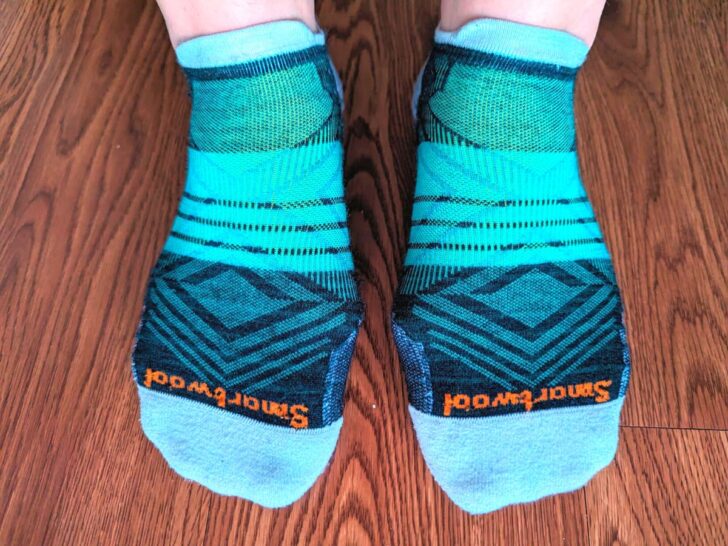
My Smartwool ankle socks are holding up well after a few years of wear. This well recognized brand is available in dozens of outdoor stores.
Pros:
- Good cushioning on the thicker socks
- Good variety of designs and colors
- Made in USA
Cons:
- Expensive
- Always wear out at the back of the heel (but I feel like I get my money’s worth because I do wear them a lot)
- Guarantee is only for 2 years
I really like my Smartwool ankle socks because they are so comfortable and have really good cushioning. You can buy them at outdoor gear shops. Often times I don’t find the best selection locally, they only have one or two designs. You can also buy them from the Smartwool website.
Icebreaker
I bought a pair of Icebreaker ankle socks at the same time as I purchased my Smart Wool ankle socks and the Icebreaker socks are a dealbreaker for a couple of reasons.
These socks were not long lasting – mine got a hole in the bottom at the heal after wearing them only a few times. I won’t be buying this brand of sock again. I don’t think they offer good value for money.
Also, the socks kept slipping down the back of my ankle so that was annoying, having to adjust them too often. I can’t use them for hiking so I just wear them around the house. However, I do own a set of Icebreaker thermal underwear and those are a great product but the socks, meh.
Pros:
- Lightweight
- Quick drying
- Breathable
Cons:
- Wear out quickly
- Poor fit around ankle and heel

Summary of Women’s Hiking Socks
Invest in a few great pairs of hiking socks and you’ll be all set for years on the trails. The best women’s hiking socks are made from a blend of Merino wool and synthetic fabrics to offer the ultimate in comfort as well as durability. Well known brands like Darn Tough and Smartwool are a good choice for hiking socks with the best variety of colors and designs while newcomer Silverlight offers limited choice but a quality hiking sock worth trying out.
As previously mentioned I did receive a free pair of Silverlight socks to try out but all of the other socks featured in this article I purchased on my own.
Save this to Pinterest for later!