Undoubtedly one of the most uniquely beautiful national parks in the United States, Yellowstone National Park spans over 2.2 million acres and boasts an array of breathtaking natural wonders and scenery.
But what should you do at Yellowstone? In this article we’re sharing 21 places to see in Yellowstone National Park.
Situated mostly in northwestern Wyoming, but also crossing into Southern Montana and Eastern Idaho, Yellowstone Park is located in an extremely seismic and volcanically active region.
In fact, at Yellowstone there are over 10,000 thermal features including tons of amazing geysers and hot springs. That’s something to keep in mind while planning your trip to Yellowstone!
The activity below the earth’s crust is the reason that visitors to the park can enjoy spouting volcanic geysers, valleys, hot springs, alpine forests and rivers, and a bustling ecosystem of wildlife.
Here are 21 epic things to do at Yellowstone National Park.

Explore This Guide:
Things to Do in Yellowstone National Park
1. Old Faithful
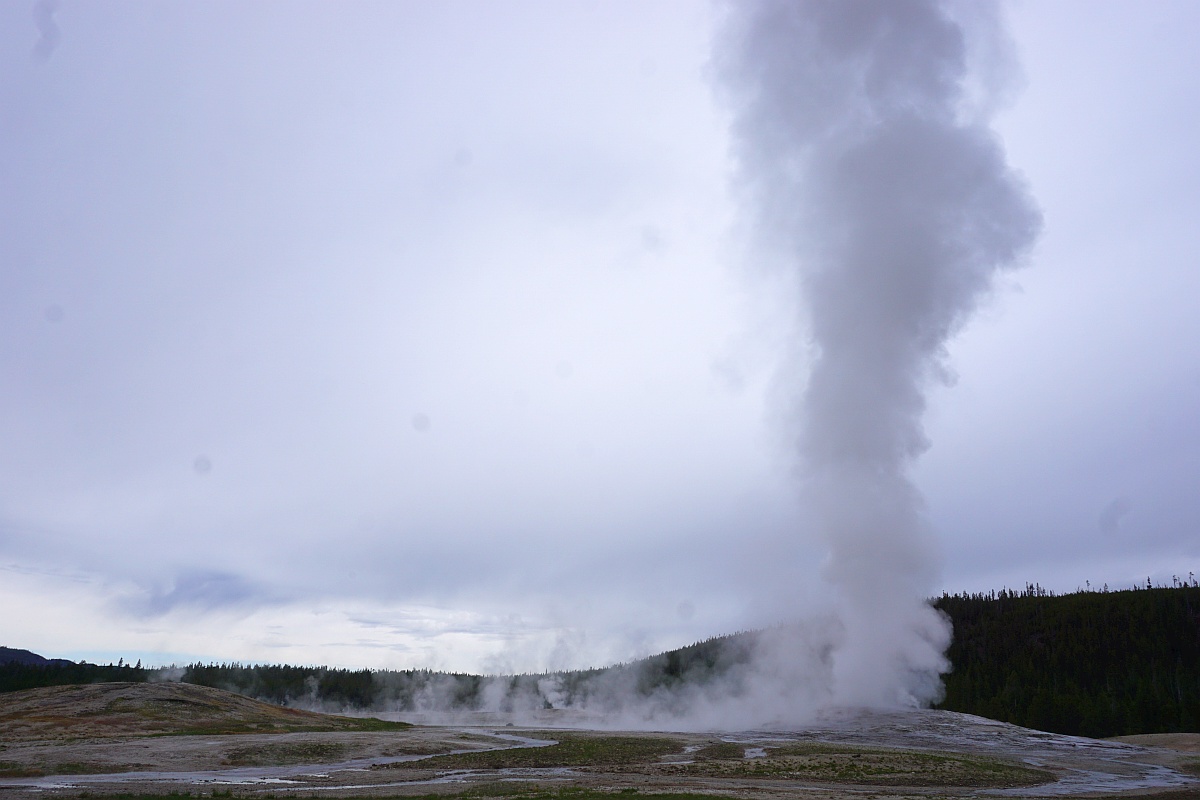
Old Faithful is Yellowstone’s most popular attraction. Erupting about every 60 to 90 minutes it’s a no brainer to add this to your Yellowstone must-see list.
Going to see this volcanic geyser in action is made super easy via boardwalks covering the area known as the Upper Geyser Basin.
Generally, the average height Old Faithful erupts is around 130 feet and it can last anywhere between 1.5 to 5 minutes per eruption.
2. Fairy Falls Hike from Grand Prismatic Spring Overlook
Even if you aren’t the biggest hiker, you might make an exception to do the Fairy Falls Hike. You can take in the view of Grand Prismatic Spring from the overlook and continue on to the waterfall hike.
Known as one of the best hikes in Yellowstone, the trail leads to the remarkable 200 ft (61 m) waterfall called Fairy Falls.
The hike is a loop of 5.4 miles (8.7 km) and considered easy. You’ll find this hike in the Middle Geyser Basin.
3. Boiling River Hot Spring
Despite Yellowstone being covered in hot springs, rivers, and lakes, there aren’t many places that you can actually swim or soak in the springs.
However, you may get a chance to take a dip in Boiling River Spring, possible because of its specific location where the hot spring flows into the Gardiner River. But the temperatures fluctuate so it’s not always open for soaking.
Check the local updates from the rangers to make sure that you can safely take a dip at Boiling River Hot Spring.
This natural hot tub is located just two miles north of Mammoth Hot Springs in the north-eastern region of the park.
4. Upper Geyser Basin
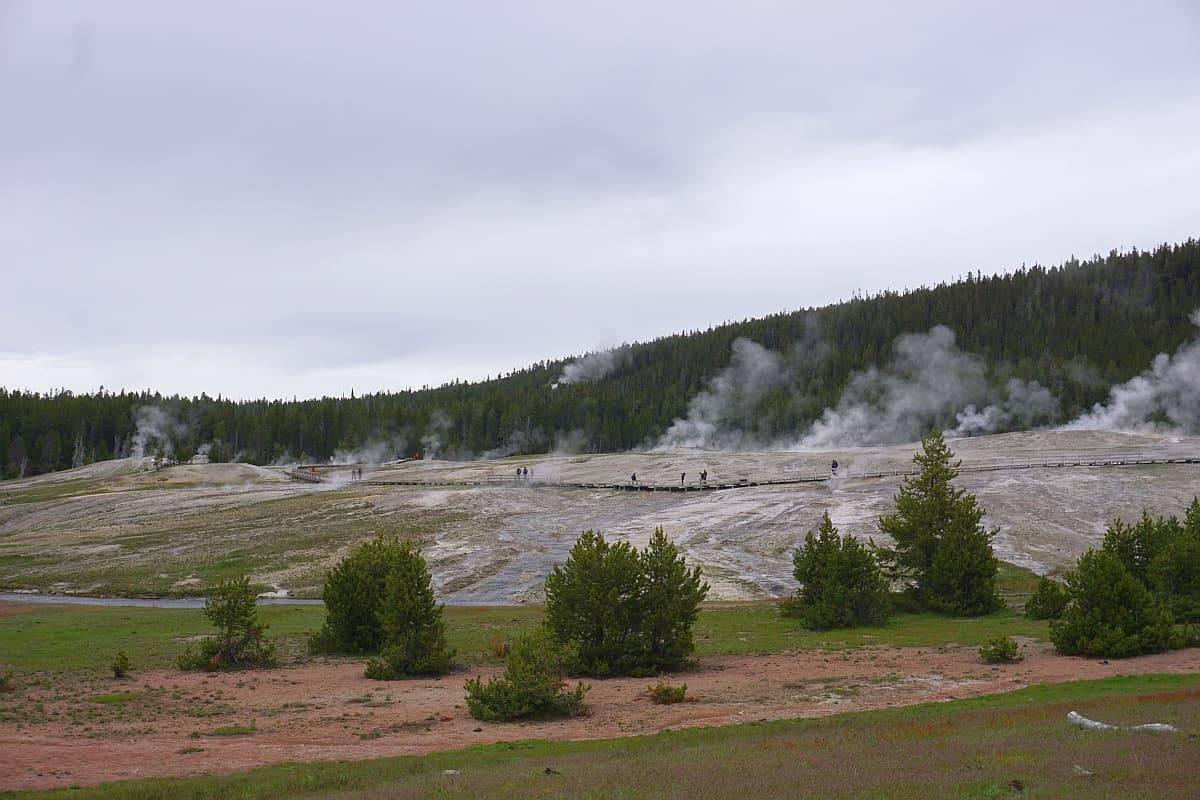
Besides the famous Old Faithful geyser there is much more to see at the Upper Geyser Basin.
The Upper Geyser Basin is a large field of volcanic geysers that spout super-heated water from beneath the earth’s surface.
You can easily spend a couple of hours walking along the boardwalks and enjoying the hydrothermal features this area boasts.
Some popular sites include the Lion Geyser Complex, Beehive Geyser, the Blue Star Spring, and Ear Spring.
5. Hayden Valley
If you love to see wildlife in their natural habitat, then a visit to the centrally located Hayden Valley is one of the best places for you to visit in Yellowstone.
In this valley you can commonly see (from the safety of your vehicle) herds of bison, elk, and even grizzly bears.
The Hayden Valley is also a bird watchers paradise, where you’ll be able to see a large selection of water birds and birds of prey including Canada goose, pelicans, bald eagles, osprey, and northern harriers, to name a few.
There are also some fantastic lookouts where you can get stunning pictures of the valley itself.
6. Grand Prismatic Spring
Prepare to be amazed when you set eyes on Grand Prismatic Spring!
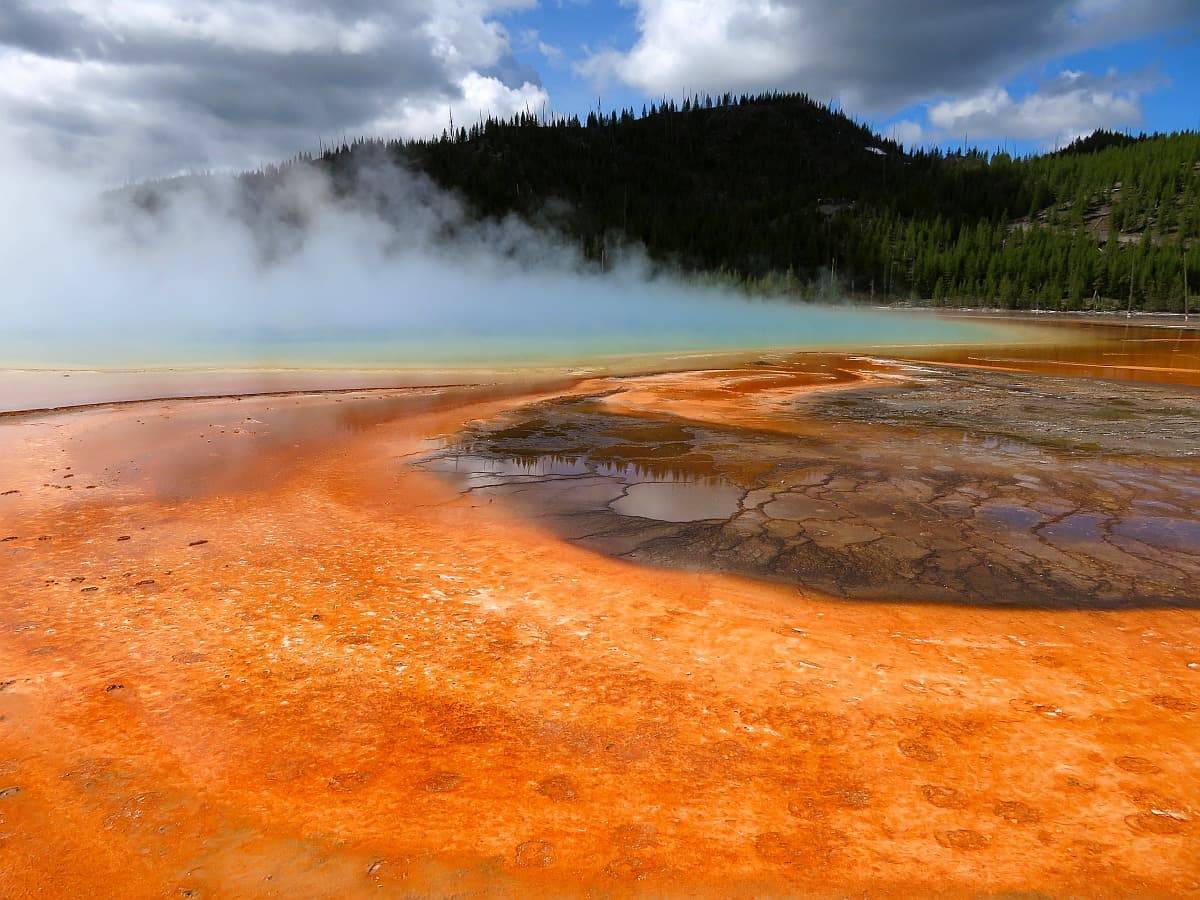
The Grand Prismatic spring, located in the Midway Geyser Basin, is a renowned and exclusive site of Yellowstone, commonly used in images to promote the park.
It is famous for its brightly-colored features caused by the different algae and bacteria that grow in the spring that exude an array of green, yellow, brown, red, and orange, which only enhance the clear blue water of the spring itself.
It is the largest hot spring in the United States and third largest in the world.
Can you swim in Grand Prismatic Spring?
No, you can’t swim in Grand Prismatic Spring because the temperature is 160 F (71 C) and due to the extreme acidity your body would literally dissolve within minutes. Yikes!
7. Yellowstone Lake
Yellowstone Lake is the biggest lake in the national park, boasting spectacular surrounds thanks to being situated 7,733 feet above sea level.
Due to its altitude, it freezes over in the winter months, and remains extremely cold all year-round – around 41 F (5 C) average temperature.
Generally the Yellowstone Lake thaws by late May to early June and opens for fishing on June 15.
Fun fact: Yellowstone Lake has the biggest population of wild cutthroat trout in North America.
8. Grand Canyon of the Yellowstone
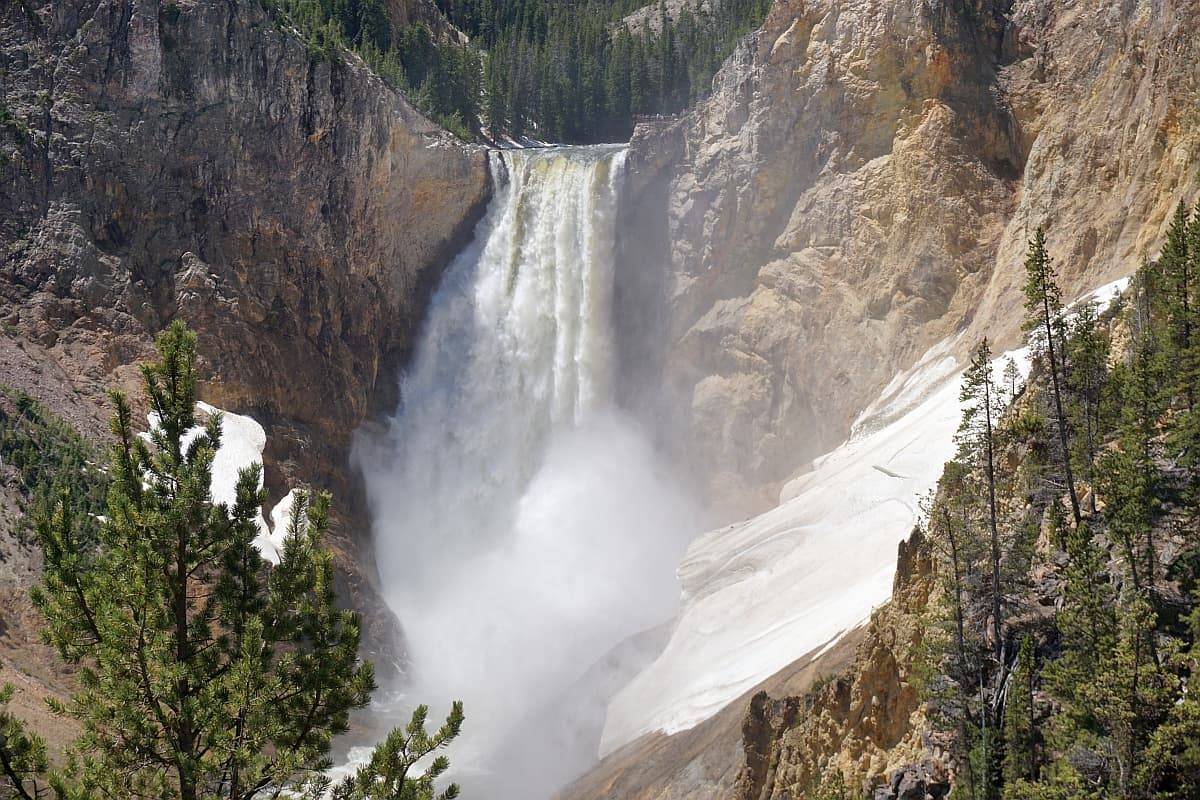
If you love dramatic canyons, topped with lush alpine forests, and waterfalls, then the Grand Canyon of the Yellowstone is your happy place at Yellowstone.
The Grand Canyon area boasts some of the parks most complex natural geology.
Formed by a huge volcanic eruption well over 630,000 years ago, you’ll get to see Yellowstone River weaving downstream through the shallow canyon, several waterfalls, and fantastic lookouts to really take in the natural scenery of Yellowstone.
Some important landmarks you can add to your list if visiting the canyon include Agate Creek, Artist’s Point, Inspiration Point, Calcite Spring, Overhanging Cliff, Point Sublime, and Silver Cord Cascade.
Grand Canyon of the Yellowstone is definitely one of the top ten things to do at Yellowstone.
9. Biscuit Basin
Geysers, springs, and more geysers and springs!
The Biscuit Basin is located about three miles north of Old Faithful and consists of some of the most fascinating hydrothermal features of Yellowstone.
What makes this site even better is that to see most of the Basin’s highlight, you can just walk along a 0.6-mile lollipop loop boardwalk.
Some of the sites you will see along the boardwalk are the Cauliflower Geyser, Black Opal Pool, Sapphire Pool, Jewel Geyser, Shell Spring, Avoca Spring, Mustard Spring, and Black Pearl Geyser. The Basin is divided by the Firehole River.
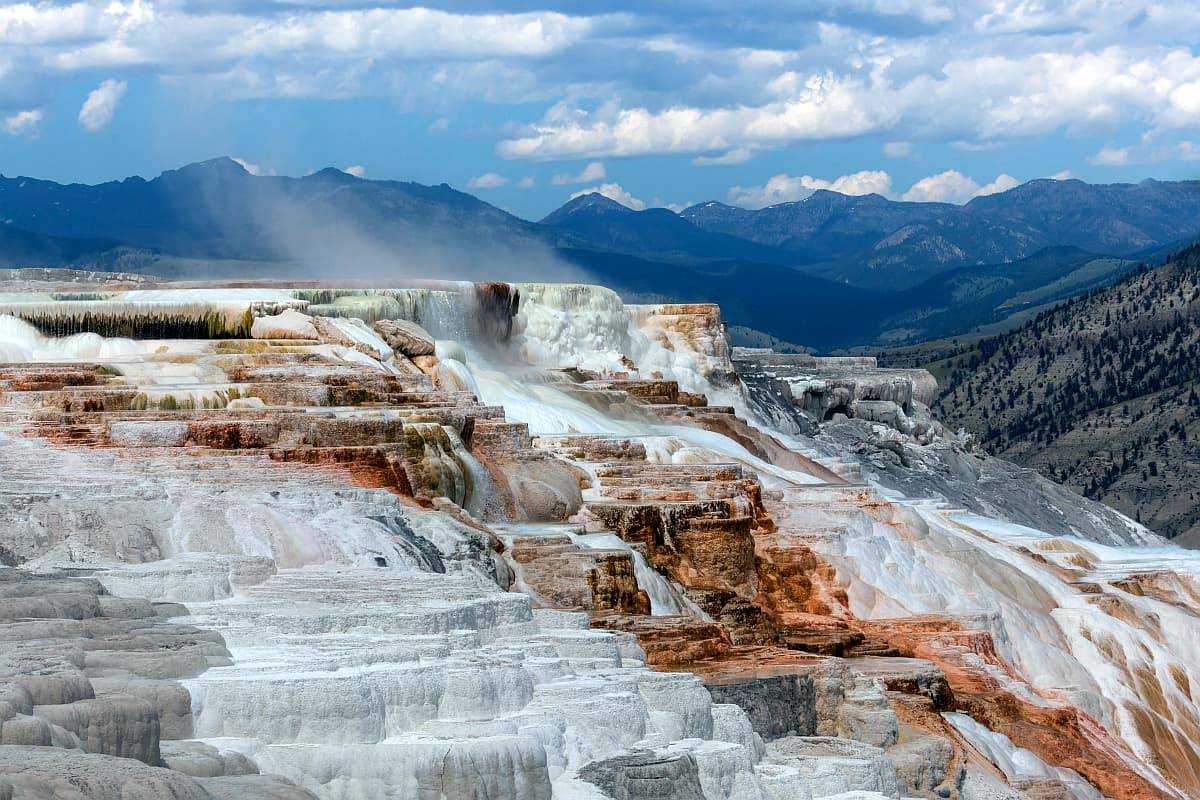
10. Mammoth Hot Springs
The Mammoth Hot Springs, located in the north of the park, near the town of Gardiner, Montana is picturesque and mesmerizing.
This area and the hydrothermal features are exquisitely different to other regions of Yellowstone, making it a popular spot to visit.
What makes the Mammoth Hot Springs unique to others in the park is the hot water reacting with the travertine, a type of limestone, leaving a chalky deposit and appearance to the springs.
Mammoth Hot Springs has its own visitors center that can prove quite educational, especially for those wanting to learn more about the area in general.
And it’s a popular spot for hikers with several stunning trails in the area.
11. Mount Washburn
Mount Washburn is one of Yellowstone most prominent mountain peaks standing at 10,219 feet (3,115 m).
At the summit there is a panoramic lookout tower where you can get stunning views of the canyons below and on clear days, the Teton range.
The area itself, is popular spot for hikers with several trails heading in all directions.
And there’s a fire lookout tower that you can visit at the summit. Cool, right?!
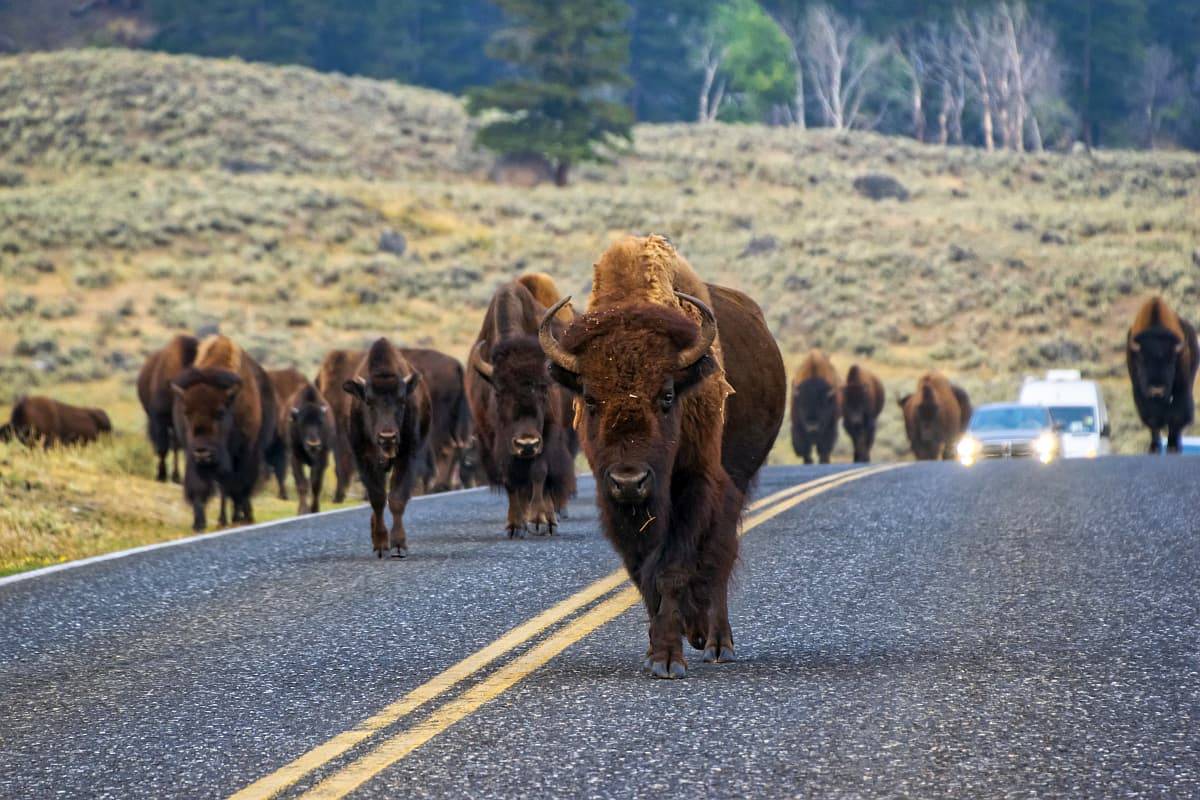
12. Lamar Valley
Wildlife lovers will not want to miss Lamar Valley.
Located in the northern corner of the park, you’ll have the best chance to see wolves such as the Junction Butte wolf pack.
It’s also a popular spot for bison, coyotes, birds of prey, grizzly bears, deer, and badgers. There are a few campsites in the area close to rivers, hot springs, and lakes where you can enjoy your natural surroundings.
13. Tower Fall
Love waterfalls?
Another north-eastern site to see is Tower Fall, located near Tower Junction. It is 132 feet (40 m) plunging waterfall easily accessible to visitors.
There is also a lot of wildlife around the waterfall including bighorn sheep, peregrine falcons, osprey, red-tailed hawks.
Hiking used to be permitted to the bottom, but has since been prohibited due to severe erosion, however, there are other hikes to be done in the area such as Lost Lake Trail and Garnet Hill Loop.
14. West Thumb Geyser Basin
If you are looking to get away from the crowds but still experience one of Yellowstone’s most beautiful Geyser basins, then the West Thumb Geyser Basin is an interesting and more relaxing alternative to the other major Geyser Basin areas.
Despite not having any major geysers, some of the hot springs are equally as beautiful as the famous Grand Prismatic Spring such as Collapsing Pool and Blue Funnel Spring.
The Abyss Pool and the Fishing Cone are also popular sites to visit.

15. Norris Geyser Basin
Another one of Yellowstone’s largest and more extreme Geyser Basins, Norris Geyser Basin, is known to be a touch more volatile than its counterparts.
With most of the area’s surface sitting well above boiling point, the area still holds the record for highest temperature ever recorded in all of Yellowstone’s geothermal areas – a stunning 459 F (237 C).
Throughout the Basin, you will get to see more brightly colored hot springs and get some great pictures of the Porcelain Basin, notable for its milky appearance.
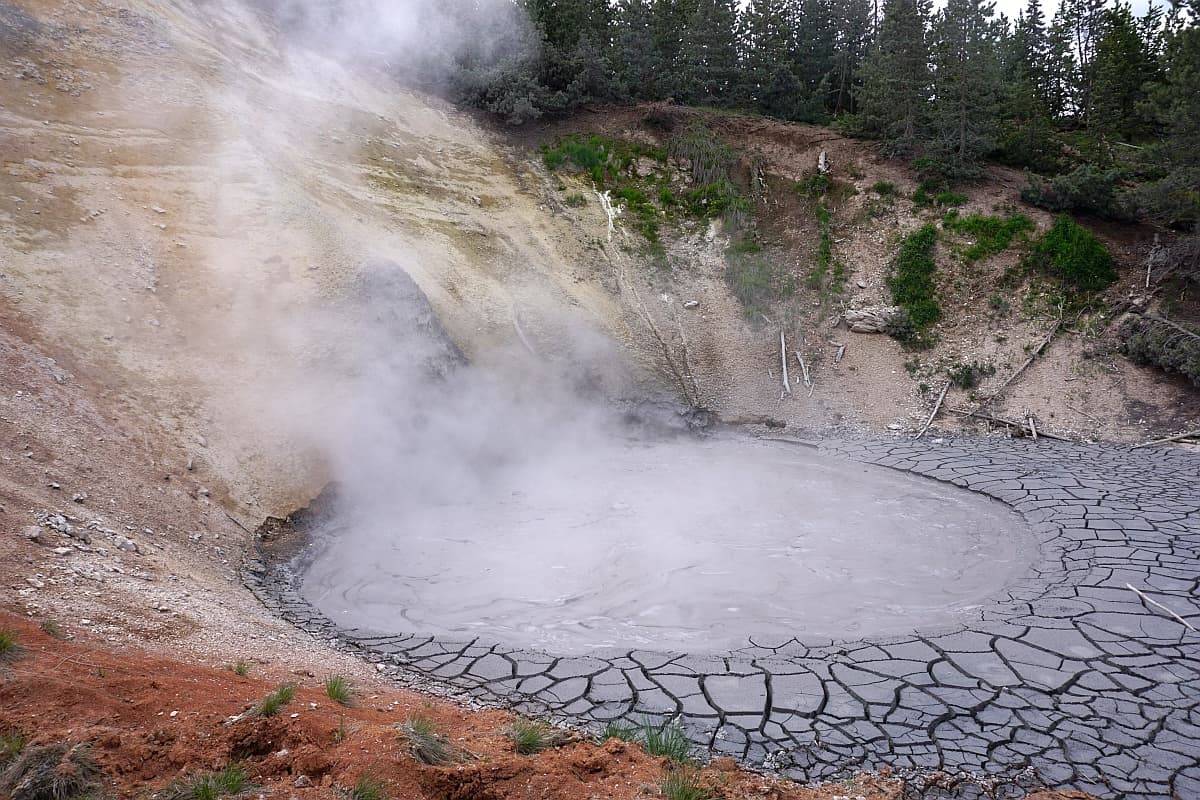
16. Mud Volcano
Mud Volcano is a unique geyser area that has several literal frothing pits of mud.
It is located alongside West Thumb Geyser Basin, which is a lesser visited area of Yellowstone.
An interesting feature of Mud Volcano is that its muddy water in the pits have a PH level of around 2.5 which is equal to that of stomach acid!
Some other attractions to see in this area include the Dragon’s Mouth Spring, Sour Lake, Churning Cauldron and Sizzling Lake. Sounds a bit spooky, doesn’t it?
17. Firehole Canyon Drive
Firehole Canyon drive is one of the most popular one-way scenic roads you can do in Yellowstone National Park.
It’s just off the Grand Loop Drive south of Madison in Wyoming. Along this two-mile road, you will pass the Firehole Falls and a popular swimming spot on the Firehole River.
There are several spots to stop and snap photos of this majestic spot in Yellowstone.
18. Firehole Lake Drive
Firehole Lake Drive is a one-way 3-mile road through a small section of the Lower Geyser Basin that ends across the road from the fountain paint pots.
This is an awesome place to go even if the weather isn’t perfect and you want to see some thermal features from the comfort of your vehicle.
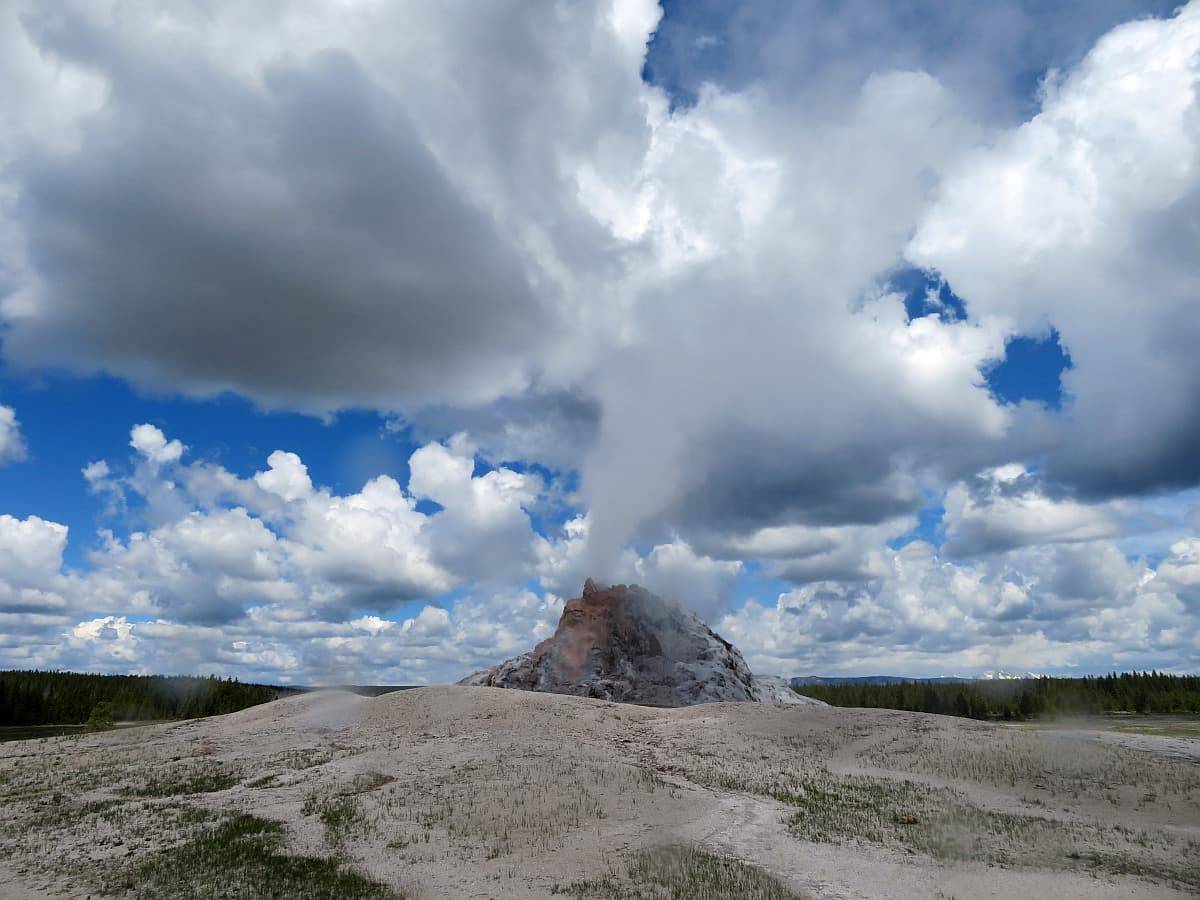
Some of the cool stuff you’ll see on Firehole Lake road are the Sunrise Pool, Pink Cone Geyser, Firehole Lake, White Dome Geyser, and Great Fountain Geyser.
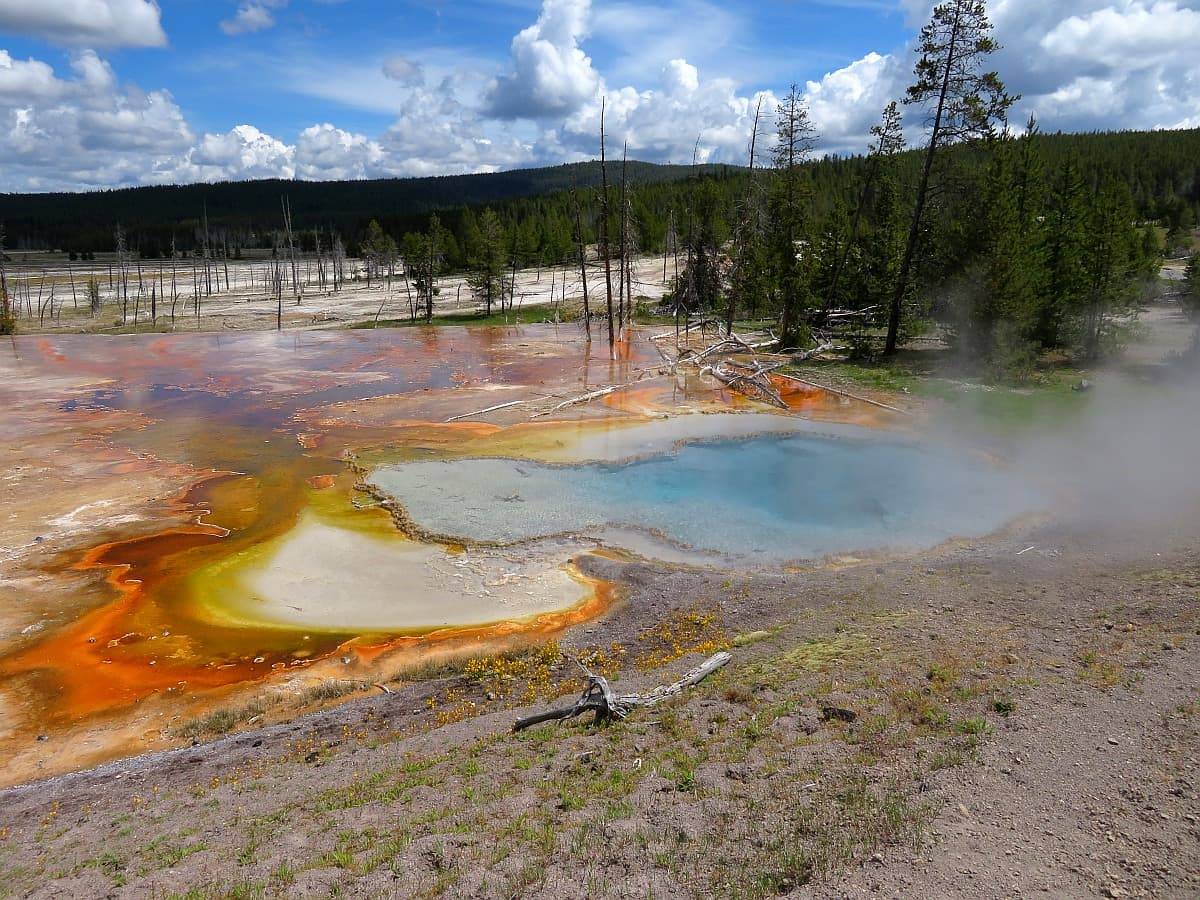
19. Fountain Paint Pots (Lower Geyser Basin)
The Lower Geyser Basin is the largest basin area in Yellowstone, covering 11 times more square miles than the more famous Upper Geyser Basin.
Despite its size, to view the thermal pools and geysers, you can gain access via another looping boardwalk where visitors can view all the sites that have to offer.
You will see the Fountain Paint Pots, Celestine Pool, Clepsydra Geyser, Fountain Geyser, Red Spouter, Silex Spring, and Great Fountain Geyser that can spout up to 200 feet high.
20. Roosevelt Arch
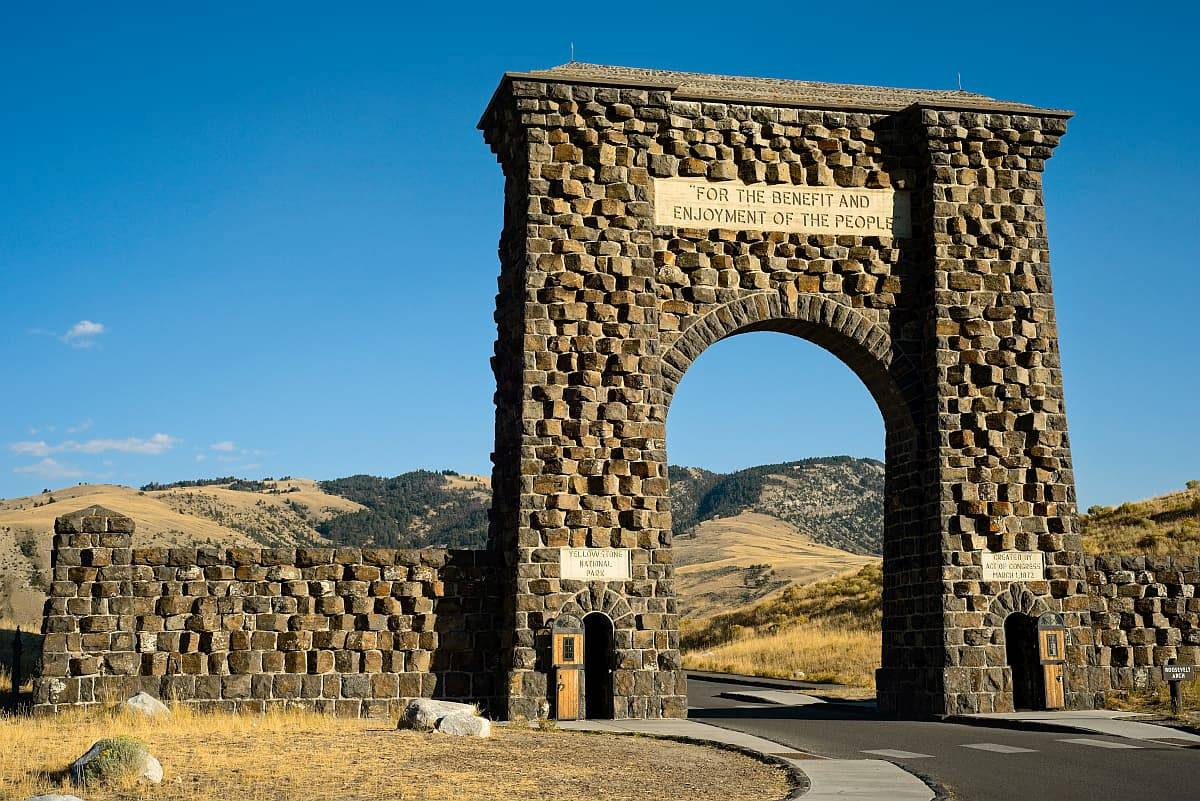
If you want to include one site in Yellowstone National Park that is not formed from a mix of seismic and volcanic activity, then a visit Roosevelt Arch must be on your list.
The arch stands at the northern entrance just near the town of Gardiner and was constructed to act as an emphatic statement for visitors entering the park.
The Arch stands 52-feet high and was constructed in 1903. On the front, it reads “For the Benefit and Enjoyment of the People” as visitors enter the park.
21. Fort Yellowstone
If you are looking to add a historical and educational site to your trip to Yellowstone, then you should add a stop at Fort Yellowstone.
This site is an old U.S army fort that now has national significance with regards to the nation’s history.
It is located as part of the Mammoth Hot Springs historic district in the northeastern section of the park.
It is where you’ll find the first administrative and concession facilities ever built in the park and it is now considered Yellowstone park’s headquarters.
More Yellowstone Trip Planning Info
Tips for Planning a Trip to Yellowstone
5 Epic Reasons to Visit Yellowstone
Other National Parks to Visit
Guide to Visiting Glacier National Park (Montana)
Why You Should Visit North Rim Grand Canyon
Discover the Magical Petrified Forest (Arizona)
Easy Hikes at Arches National Park (Utah)
5 Easy Hikes at Zion National Park (Utah)
Guide to Visiting Saguaro National Park
Solo Trip to Capitol Reef National Park (Utah)
1-Day Itinerary Bryce National Park (Utah)
