
Whether you have just one day in Rome or you’re looking for a foolproof, already-planned, and tested itinerary of Rome in one day, this article brings you all the answers you need.
No matter the reason you’re discovering this incredible European capital in only twenty-four hours, the key to success is to make the most of your time by focusing on the city’s highlights.
Read on to enjoy our itinerary for a day in Rome and take advantage of the extra options we include to spice up your time in the capital of Italy.

This post may contain affiliate links and Solo Trips and Tips may receive a commission for purchases made through links. See our disclosure about affiliate links
Explore This Guide:
Morning in Rome: Roman Ruins
Start the day by indulging in a traditional Roman breakfast at any local bar.
Choose to have an espresso on the go and pair it with a lush maritozzo pastry with abundant whipped cream—maybe the most delicious sweet you can taste in the Italian capital.
Once the most important meal of the day has been sorted out, let’s begin exploring Rome.
Colosseum, Roman Forum, Palatine Hill
Since there’s a lot to do and being overwhelmed is common, let’s plan to focus on the most iconic sights in the capital.
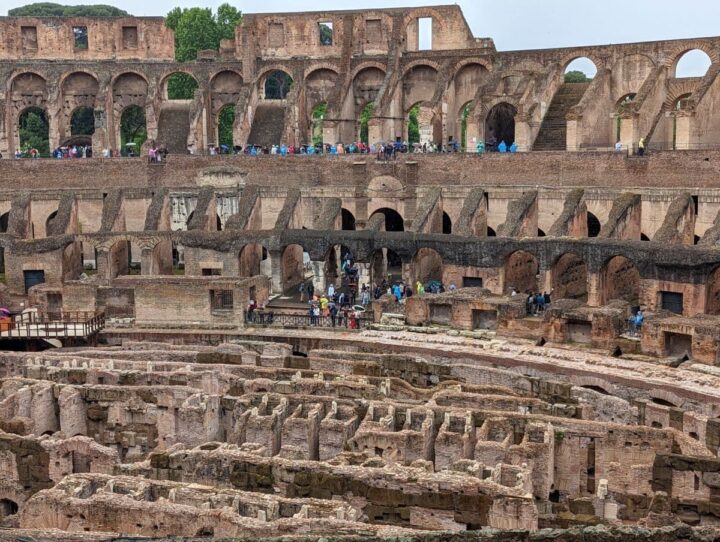
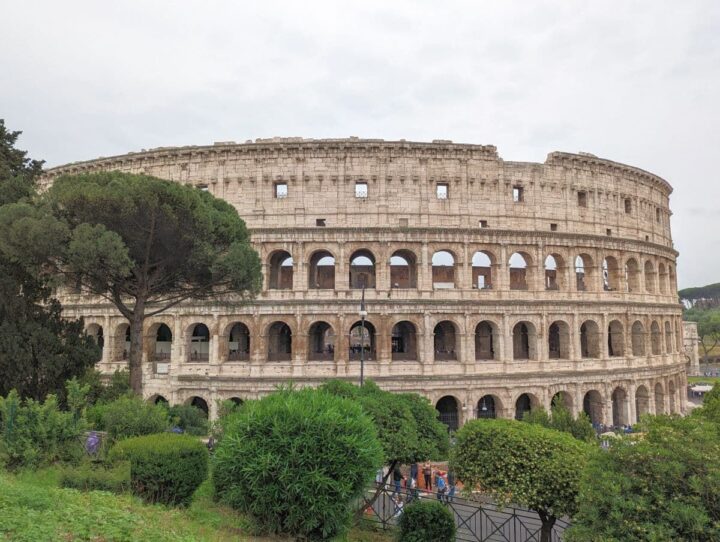
It’s a good idea to start by visiting the magnificent Colosseum, arguably Rome’s most famous landmark.
If you join a guided tour you can take advantage of hearing extra details and learning stories and legends from a local guide, something that always makes a visit more entertaining and engaging.
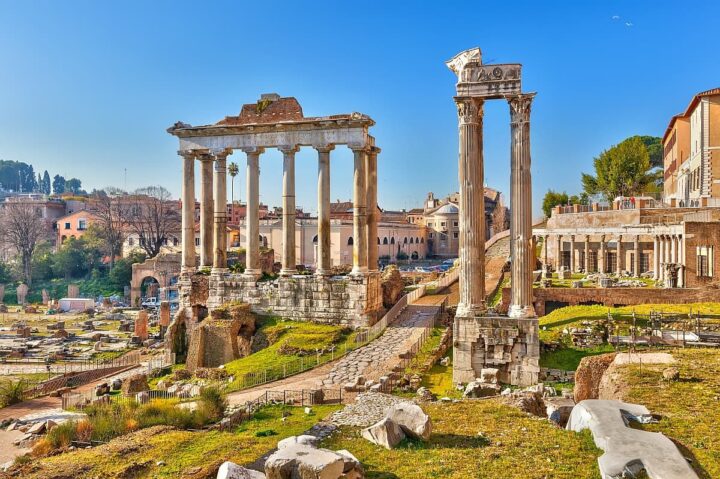
It’s a good idea to visit the adjacent Roman Forum after checking out the Colosseum; this area was Rome’s most important center for political and social activities.
During the same morning, you can head to Palatine Hill, known as one of the Seven Hills of Rome. The place is perfect to take a snapshot (and many more!) of the city, enjoy the spectacular views of Rome’s skyline, and explore the ancient ruins of the former Imperial Palaces.
La Bocca della Verità
And if you want something extra, not far from the Colosseum, you can visit La Bocca della Verità, also known as the Mouth of Truth in English.
This is a super popular attraction in Rome, visited by many tourists every day.
La Bocca della Verità is an ancient marble mask with a fearful face carved on a large stone disc representing a pagan deity.
The mask is believed to date back to the 1st century CE and is located in the portico of the Church of Santa Maria in Cosmedin.
According to the legend, if a person tells a lie while placing their hand inside the mouth of the sculpture, the mouth would close and cut their hand.
Visitors love to have their picture taken with their hand inside the mouth, which has become a symbol of honesty and truth.
A whole morning wandering the fantastic ruins of ancient Rome will certainly make you hungry.
LEARN MORE: 3 Days in Rome Itinerary
Lunch at Trattoria Monti
So go ahead and enjoy terrific value-for-money pasta that respects the local tradition at Trattoria Monti.
The place is near the Colosseum (Via di San Vito Street) and offers various traditional Roman dishes, including delicious pasta.
Colosseum Palatine Hill Roman Forum Tour
Insider’s tip: The Colosseum is, together with Saint Peter’s Cathedral, the most visited place in Rome; booking your visit in advance is key to avoiding long lines, guaranteeing the most convenient time slot, and allowing you to save time.
This particular tour is affordable and offers incredible value for money.
Alternative for your first morning in Rome
If you’re not into archaeological wonders or this is not your first time in Rome and have visited the Colosseum before, you might want to visit a few lesser-known gems in town.
In that case, you can devote this morning to admiring some of the most beautiful churches in the city.
Basilica di Santa Maria del Popolo
Situated near Piazza del Popolo, a large square in the northern part of Rome’s historic center, this basilica offers you the chance to visit a museum-like exhibition for free. (Read our full list of 10 best free things to do in Rome)
The place is well-known not only for its beautiful Renaissance and Baroque architecture but mostly for its impressive artwork collection featuring masterpieces by renowned artists such as Caravaggio, Raphael, Bernini, and Pinturicchio.
Basilica dei Santi Silvestro e Martino ai Monti
This beautiful church has a history that dates way back to the 2nd century. Back then it was a prayer site. The church was built in the 4th century and underwent renovations a number of times after. Today it’s a magnificent place to explore, and it’s located on the north edge of Parco del Colle Oppio.
Also known as San Martino ai Monti, the church was built on top of an ancient Roman building, and you can visit it from the crypt. There you will also see the ancient mosaic, created in the 6th century, of Pope Sylvester.
LEARN MORE: 35 Famous Landmarks in Italy

San Giovanni in Laterano
Another basilica you must notice is San Giovanni in Laterano, known also as the Archbasilica of Saint John Lateran. The place is the oldest and most important of Rome’s significant basilicas, as it is also the cathedral of Rome’s bishop (aka the Pope).
San Giovanni in Laterano features interiors with intricate decorations, fantastic statues, and some amazing chapels. Known for its grandeur and historical significance, the church dates back to the early Christian period. You can also visit the adjacent Lateran Palace and Baptistery that are part of the complex.
Afternoon in Rome: Vatican City
Head to the other side of the Tiber River to spend the afternoon exploring the world’s smallest independent state.
Consider that the area is densely populated with things to see and museums to explore, so even if this is the smallest state in the world you could spend weeks exploring and still not see it all.
Sistine Chapel & Vatican Museums
If time is an issue, start by heading to the Sistine Chapel, which closes in the early afternoon.
This way, you will be able to also explore the Vatican Museums and then have Saint Peter’s Basilica with fewer crowds in the late afternoon.
The Vatican Museums house an impressive collection of art and historical artifacts, religious archives, coins, and a lot of interesting pieces of art and paintings.
The highlight is the Sistine Chapel, famous for Michelangelo’s ceiling frescoes.
You can admire this work of art (one of the most important masterpieces in the country) before continuing your tour of the museums, which include the Pinacoteca (or art gallery), the Egyptian Museum, the Gallery of Tapestries, the Pius-Clementine Museum, and the Gallery of Maps.
Guided tours and skip-the-line tickets for the Vatican Museums can make the experience much easier, so do not hesitate to book the tickets in advance.
Saint Peter’s Basilica
Next up is the much-awaited visit to the most important church in the world, Saint Peter’s Basilica.
A monumental church with stunning architecture both on the outside and the inside where you should devote at least a few minutes to Michelangelo’s marble masterpiece, the Pietà.
Castel Sant’Angelo
Before devoting the last hours of the day to enjoying the most famous sights of Rome’s historic center, and if you still have some available time, I recommend a short visit to Castel Sant’Angelo, an imposing site located in the area, on the right bank of the Tiber.
Also known as the Mausoleum of Hadrian, the impressive fortress has a rich history dating back to ancient Roman times and has served various curious purposes throughout the centuries.
The building was originally built between 135 and 139 CE as a mausoleum for Emperor Hadrian with a distinctive massive circular base and a towering cone-shaped roof.
During the fifth century, the building was transformed into a military fortress with a very strategic position overlooking the river and the city, therefore becoming a key defensive structure for the city of Rome.
However, during the Renaissance years, the castle was connected to the Vatican via a fortified corridor, the Passetto di Borgo, a secret passage with the main purpose of being an escape route for the Pope in times of danger and siege.
Over the centuries, the place was also used as a papal residence and a Treasury.
Today, the castle houses a museum that includes a collection of sculptures, paintings, and medieval weapons.
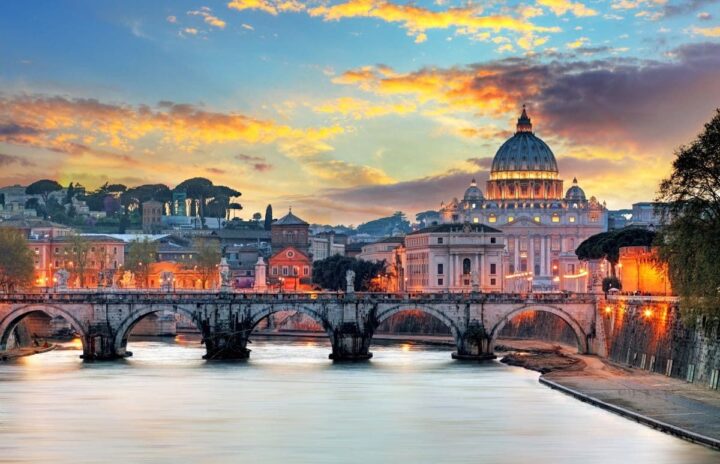
Once you have enjoyed the views of Rome from the castle’s terrace, head to one of the most picturesque bridges of Rome, Ponte degli Angeli, right opposite the castle for a few snapshots of the Tiber at sunset and start a fabulous evening in Rome!
Evening in Rome: Traditional Landmarks
Leaving these popular sights to the last hours of the day will offer you the advantage of finding fewer tourists around, thus being able to walk peacefully and stop for as long as you want at each monument.
The first place you’ll encounter is the mythical Piazza Navona, one of Rome’s liveliest squares, adorned with stunning fountains and surrounded by restaurants and cafes.
This is nothing but the ideal place to sit for a few moments and enjoy a refreshing gelato while you take in the vibrant atmosphere, and why not? – have fun with some of the common street art performances common in this piazza.
Only a few minutes from Navona Square, you will find the spectacular Trevi Fountain (often overcrowded in the mornings and more solitary in the evenings), one of Rome’s most enchanting landmarks with its distinctive Baroque architecture.
When at the fountain, don’t forget to throw a coin and wish for a return to the Eternal City.
The urban legend says that if you do so, you will be securing a new future visit to Rome.

Steps from the Fountain, you can check out the gorgeous Pantheon, another iconic building dating from the Ancient Roman Era.
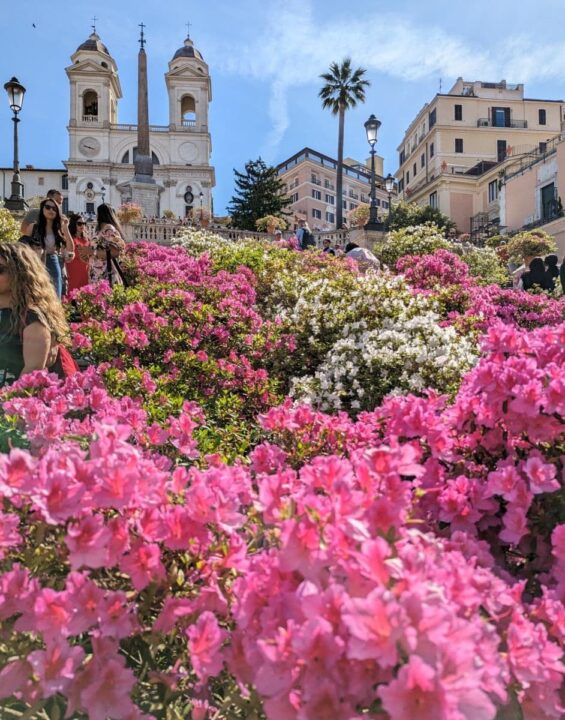
From here, stroll through the charming streets to the Spanish Steps and enjoy a delicious dinner of local amatriciana pasta, one of the staples of Roman cuisine.
Finish dinner with a dish of tiramisu to go… and since you don’t live twice, indulge in the classic version of the dessert, but also try other varieties such as coffee liqueur or seasonal fruits.
For a great tiramisu head to Caffè Ciampini on Piazza di San Lorenzo in Lucina, near the Spanish Steps. They serve delicious tiramisu on-site but also have a few takeaway options.
End your magnificent one-day in Rome exploring the gorgeous Piazza del Campidoglio on Capitoline Hill, designed by Michelangelo.
Locals claim that this is the best place to enjoy the stunning nightscape of this enchanting city.
Alternative Evening in Rome
If you’re not so enthusiastic about visiting Rome’s historic center but rather immerse in a typical Roman neighborhood, once you leave Castel Sant’Angelo, head to Trastevere for an aperitivo and a late dinner.
The place is one of the most charming quarters in Rome, featuring narrow cobblestone streets and colorful buildings, and it is ideal to savor a traditional Roman meal at one of the many trattorias in the area.
Trastevere is also one of the places where the locals hang out at night, enjoying a glass of spritz, Italy’s most beloved cocktail drink.
Tips for Visiting Rome in a Day
A whole day in Rome is not enough to see all the wonders that this ancient city has to offer; however, it will certainly be an unforgettable experience that might ignite the idea of a future longer vacation in Rome.
In any case, keep in mind that visiting Rome in a day will imply lots of walking.
The city has a scarce underground metro system (because Rome is a city full of excavations and ancient sites), and its traffic is chaotic.
For that reason, wearing sturdy and comfortable shoes is a top priority when visiting Rome and walking on its centuries-old cobblestone streets. Tired feet are never happy feet, especially when you travel!
And if you choose to get to Rome in summer, from June to September, keep in mind that the weather is hot and can be humid, so remember to carry a refillable water bottle with you and take advantage of Rome’s hundreds of fountains to keep hydrated during the day!
Also keep in mind that, when visiting Rome (or any other very popular city), booking attractions in advance is key to making the most of the day, packing more sights and attractions in one day, and wasting less time.
Pre-purchasing travel cards and public transport passes helps you to save time and avoid long queues.
Final Thoughts
As you can see, Rome is a place packed with unique history, amazing churches and museums, and spectacular architecture. It is also a place where delicious food and ancient traditions still live together in the quaint alleys and small squares on both sides of the Tiber, a fantastic city to discover and a place that you will certainly want to visit again in the future!
Save this to Pinterest for later!
More Things to Do in Italy
Guide to Cinque Terre (+Where to Stay)
10 Best Things to Do in Florence
7 Best Day Trips from Florence
Guide to Venice (Where to Stay + Things to Do)
15 Best Beach Towns in Italy (+Where to Stay!)
10 Best Hiking Trails in Italy
About the Author

Gabi Ancarola is a translator and travel journalist living in Crete. She regularly writes about Europe for several magazines about travel, gastronomy, and hospitality. She has published several travel guides about Greece and plans customized trips to the Greek islands. She loves cooking local dishes, taking photos, and driving on the mountain roads of Crete.