An incredibly beautiful gem in the northeastern heart of Italy, Venice is an ancient city surrounded by charming canals and quaint bridges with an atmospheric vibe any season.
Charming like no other, Venice can only be explored on foot (or by taking advantage of Line 1 of the Vaporetto, the public water bus, more affordable than the traditional gondola), although you can only see so many things in just a day.
A one-day itinerary of Venice could be limiting because the city is spread out and the amount of walking you’ll need to do can prove exhausting.
Yet, if you only have one day to visit Venice, I will not discourage you, because no amount of time spent in Venice can be considered wasted time… at all!

This post may contain affiliate links and Solo Trips and Tips may receive a commission for purchases made through links. See our disclosure about affiliate links
Explore This Guide:
Getting to Venice
You can reach Venice from any city in Italy either by comfortable high-speed trains (either Italo or Frecciabianca) or by long-distance bus.
The city is also served by an international airport, receiving flights from most European capitals.
Once in town, head to one of the many information points, for instance, in Piazzale Roma or the Tronchetto area, and purchase a vaporetto pass to visit the city with the help of the water bus if your feet get tired of all the walking and the bridges you’ll need to cross when visiting Venice’s sestieri or districts on foot.
Be sure to validate your vaporetto ticket before boarding the vaporetto for the first time (there is a validation machine at each vaporetto stop).
And if you decide one day in Venice is not enough, you’ll want to check out our full guide to Venice (including where to stay).
Morning: Waterfront and Piazza San Marco
Saint Mark’s Square is the heart of Venice and the most visited area in the city, so visiting early is key if you want to make the most of the day.
If you want to find the square empty to admire its incredible landmarks and architecture, plan to arrive before nine, the opening hour of Saint Mark’s Basilica. That way, the place will be almost empty and the views truly spectacular.
Booking a skip-the-line tour of the basilica and the adjoining Dodge’s Palace is another must.
Since Venice is one of the most popular cities in the country, the lines to visit both landmarks are often endless.
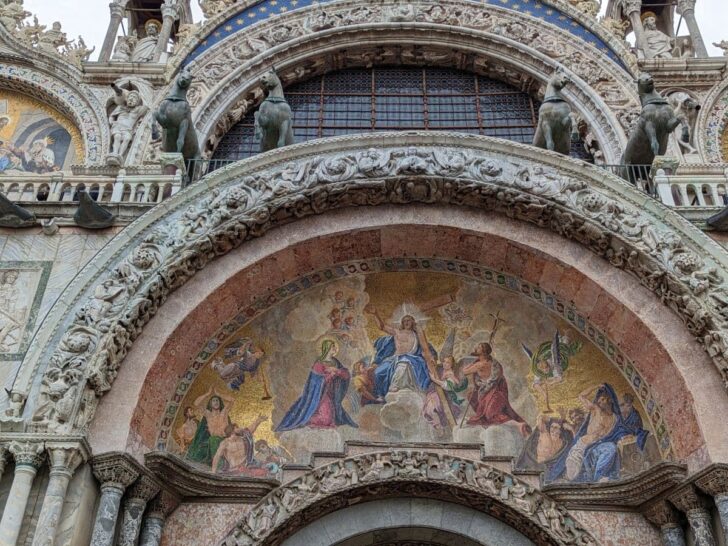
Saint Mark’s Basilica is a fantastic Byzantine gem, featuring some of the most beautiful mosaics in the country.
St Mark’s Basilica
The construction of the basilica began back in the ninth century to serve as the chapel of the Doge, who was the ruler of Venice, soon becoming a symbol of the wealth and maritime power of the Venice Republic.
Exhibiting a unique blend of Byzantine, Romanesque, and Gothic architectural styles, the church features a facade made of intricate marble mosaics, colorful marble columns, and ornate decorations.
While in the interior, the impressive marble floors, hand-carved columns, and gold mosaics are a further display of economic power and artistic refinement.
The mosaics cover a surface of more than 8,000 square meters and depict various religious scenes.
Most of these are made of gold and create a dazzling effect, especially when illuminated by the light streaming through the windows.
Inside Saint Mark’s, you can admire the Pala d’Oro, a gold altarpiece adorned with thousands of precious gems, pearls, and enamel.
The church also houses the relics believed to be the remains of Saint Mark the Evangelist.
Not far from the church’s entrance, you can also visit Saint Mark’s Museum.
It features an interesting collection of liturgical objects, statues, and other artifacts related to the history of Saint Mark’s.
Opposite the church, the endless porticoes of Piazza San Marco served as a gorgeous frame for the church’s bell tower, or campanile, a remarkably tall tower from which the views of Venice are simply breathtaking.
This skip-the-line ticket includes both access to the church and its gorgeous terrace, as well as a visit to the next-door Dodge’s Palace.
Doge’s Palace
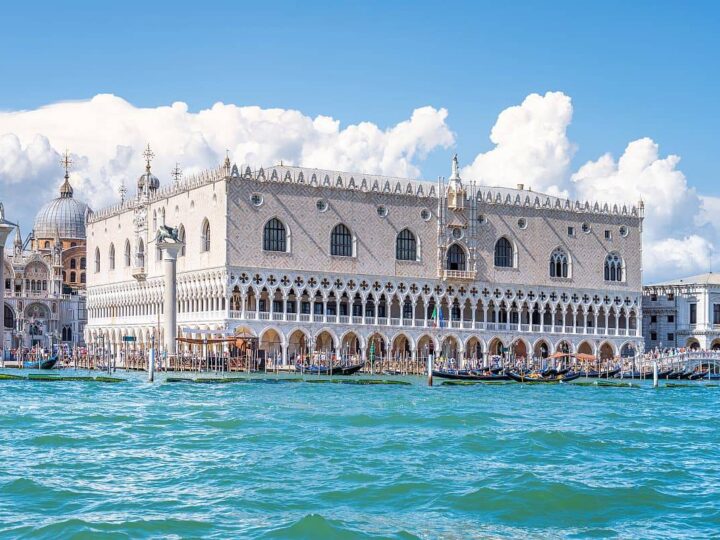
Once you’ve checked out the beautiful building, head to the nearby Doge’s Palace, or Palazzo Ducale, a magnificent place that, during the golden years of Venice, was both the seat of the government and political power, as well as the seat of the courts and the personal residence of Venice’s Duke (or Doge, the elected ruler of the republic).
Also built during the same time as Saint Mark’s Basilica, the building combines a splendid blend of Venetian Gothic, Byzantine, and Renaissance architecture with a facade made of columns and arches in white and pink marble.
The palace is also connected to the nearby prisons by the Bridge of Sighs, an enclosed bridge that earned its name from the sighs of prisoners as they glimpsed their last view of Venice before heading to endure life imprisonment in the cells of the palace.
Today, the Doge’s Palace is a museum complex that showcases various collections, including paintings, sculptures, weapons, and historical artifacts.
The visit will offer you an interesting insight into the mysterious and fascinating history of the Venetian Republic and its cultural heritage.
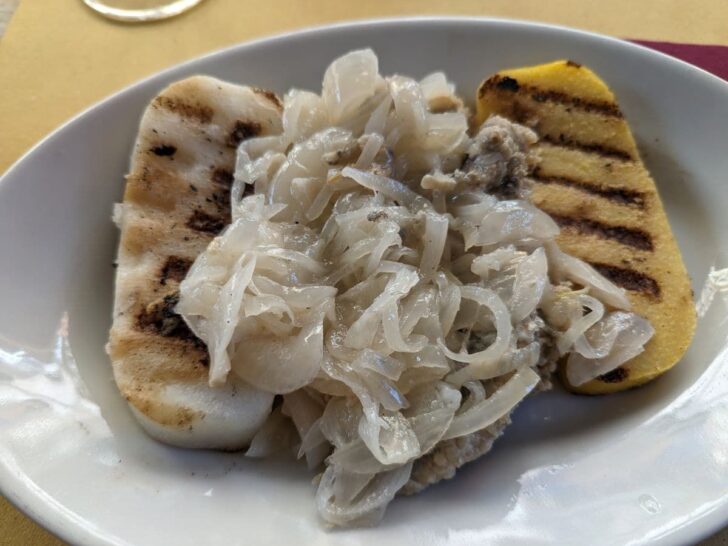
Lunch – What to Eat in Venice
Even if you might be tempted to grab a quick snack and keep walking, I suggest taking at least 45 minutes to sit and enjoy lunch like a local, since the flavors of Venice are completely different from what you might find in other regions of the country.
Some of the dishes you should try in Venice include the following:
- Sarde in Saor: One of the most traditional dishes of the lagoon, made with local sardines marinated in a sweet and sour mixture of onions, vinegar, raisins, and pine nuts.
- Risotto al nero di sepia: A black risotto made with cuttlefish ink, typically cooked with white wine and squid or cuttlefish.
- Fritto Misto: An affordable popular dish, ideal together with a cold beer, fritto misto is a platter of fried seafood, including shrimp, calamari, small fish, and sometimes vegetables.
- Baccalà Mantecato: Don’t miss this creamy and flavorful spread made with salted codfish that also includes olive oil and garlic
- Risi e Bisi: Creamy blend that resembles both a soft risotto and a thick pea soup, the dish is made with fresh peas, bacon, onion, and rice
- Bigoli in Salsa: Especially good in winter, this is a thick pasta similar to spaghetti, often served with a simple sauce called salsa that’s made of slow-cooked onions, salt-cured sardines, and anchovies.
Afternoon: Rialto Bridge Grand Canal
One of the most vivid areas in the city concentrates around the main canal and the Rialto Bridge, the oldest and most famous of the endless bridges that cross the canals and little streams in Venice.
The area is perfect to purchase Venice’s souvenirs and admire the views of the main canal from the top of the bridge.
Over here, you can check out the fantastic Rialto Market, with plenty of stalls selling fresh produce, including fish and vegetables.

Affordable Tour of Venice
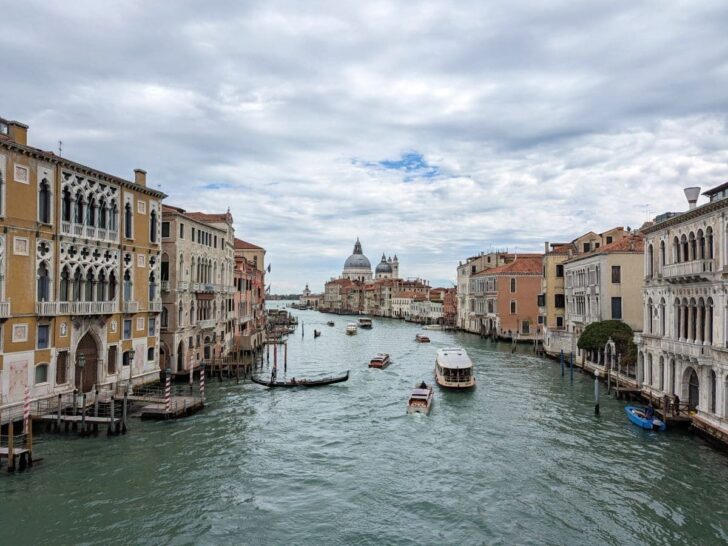
Since there’s still a lot more to see in the city and you have already had your fair share of walks, it’s time to head to the Rialto stop of the Vaporetto and (be sure to validate your ticket before using it the first time) jump on a Line 1 boat to enjoy a two-hour affordable tour of the city.
In fact, Line 1 is known as the touristic Vaporetto, even though it is a plain and regular water bus.
That’s because it follows the most popular tourist route in Venice.
This public boat will take you through some incredible landmarks, including the spectacular Ca D’Oro, the Casinò di Venezia, the wooden Academia Bridge, and several other charming bridges, buildings, and hidden corners of the city that you wouldn’t see if you were to walk all the afternoon through the maze of the city’s alleys.
Cicchetti and Bacari
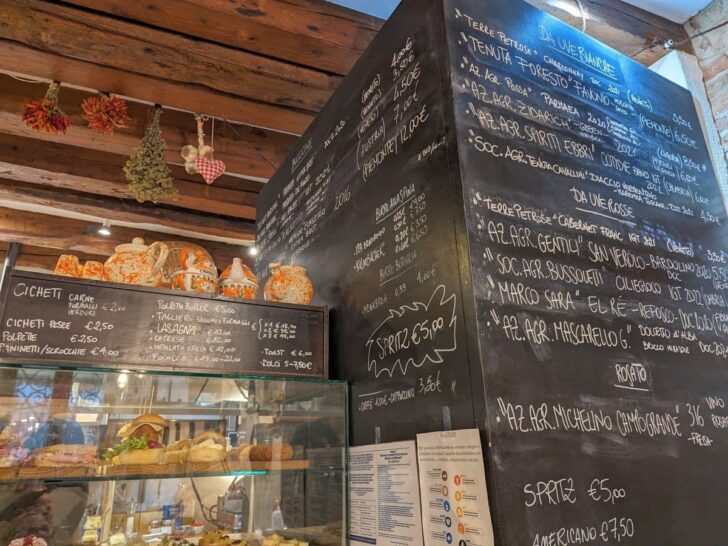
Complete the ride in the Santa Croce quarter, one of the most traditional districts of Venice, and spend the late afternoon tasting another gastronomic staple of Venice, the cicchetti, and soaking in the bacari culture of the city.
Venice’s cicchetti, also known as cicheti or cicheti Veneziani, are small bite-sized snacks or appetizers typically served in the city’s bacari (Venetian wine bars).
Cicchetti come in a wide and super creative variety of options, showcasing the region’s flavors; they can feature both seafood and meat, cold cuts, and even pickles.
There are also veggie cicchetti.
In town, each bacaro (wine bar) may have its own selection of cicchetti, so you’ll find a diverse range of options to choose from.
Some common ingredients are marinated anchovies, baccalà (salted cod), or sardines in a sweet and sour marinade, while meat options may include prosciutto, salami, or meatballs.
Vegetarian cicchetti include artichokes, mushrooms, and roasted vegetables.
A cicchetto is often served on slices of crostini (toasted bread) or small pieces of fresh bread, and they may be topped with spreads, sauces, or garnishes to enhance the flavors.

More than just being a snack, cicchetti are enjoyed as a social and casual dining experience.
Locals and travelers alike enjoy hopping from one bacaro to another, sampling different cicchetti along the way, and pairing these bites with a glass of wine or a spritz (a popular Venetian aperitif often made with Select, Campari, or Aperol).
Exploring the bacari in the Santa Croce area is probably one of the most authentic experiences; it’s a great way to discover the culinary culture of Venice and to meet the locals.
So, be sure to end your last afternoon in town by venturing into the narrow streets of Sant Croce on a cicchetti-hopping adventure.
Evening: San Giorgio Maggiore
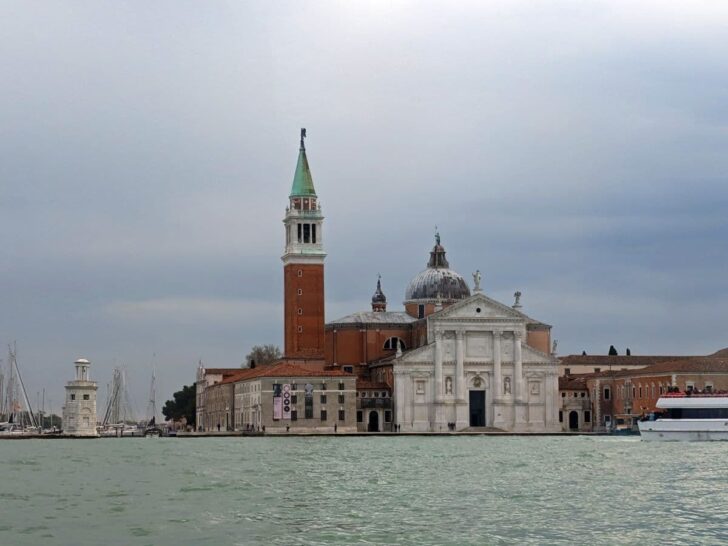
To end your day in Venice, why not take a vaporetto to the San Giorgio Maggiore island?
Over here, you will find a place that not many tourists visit and that offers some of the most magnificent views of the sunset.
When in San Giorgio Maggiore, climb the bell tower of San Giorgio Maggiore Church for panoramic views of Venice and enjoy a breathtaking sunset over the city.
The opportunities for orange-lit snapshots of the canal will be endless!
In the evening, as the day winds down, experience the magic of Venice at night, either by taking a leisurely stroll along the canals or by booking a night gondola ride.
Even if it is quite expensive, this can be one of the most romantic experiences you can have in Venice.
For around 30 minutes, you will see some of the city’s most famous landmarks from the water and under a totally different light while also discovering lesser-known routes.
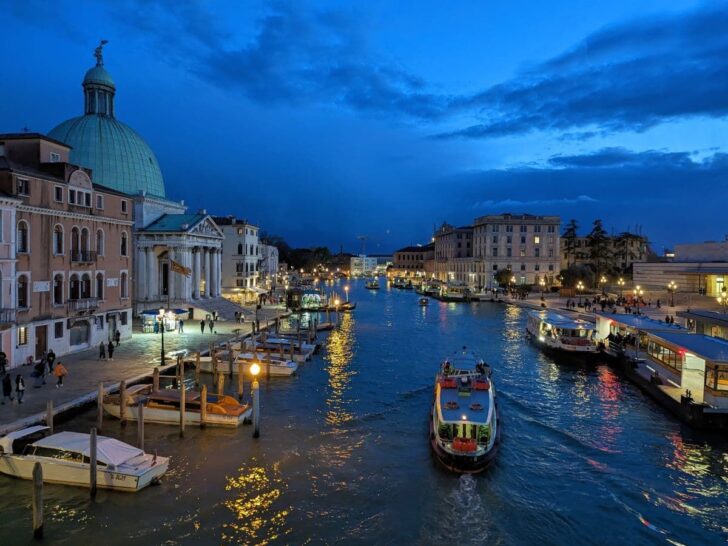
Once you step out of the gondola, you can extend your day a little bit more by heading to one of the many pastry shops you will find open until late, especially along the Grand Canal.
This is the right moment to try Venetian desserts. Some of the best Italian sweets include fritole (sweet fritters) and zaeti (cornmeal cookies), but you can also taste some tiramisu or Sicilian cannolo.
And if in the mood, pair it with a traditional Venetian coffee like a caffè corretto (with a shot of local grappa).

Alternative evening in Venice
If the gondola ride is not exactly something you’d enjoy, don’t be discouraged; the city offers a lot to do in the evening.
Home to an incredibly interesting musical heritage, attending a classical music concert can be a memorable experience.
Besides, the city houses some of the most important theaters in the country, making the visit much more enriching.
Check the schedules of venues like Teatro La Fenice or Scuola Grande di San Teodoro for performances in two truly stunning settings.
Final Thoughts
There you go, this one-day itinerary of Venice includes visits to the most important highlights as well as relaxing moments sailing along the famous Grand Canal.
Remember, though, that Venice is a city surrounded by water, which makes it humid in any month of the year.
For that reason, winters feel colder in Venice and summers are sweltering; keeping that in mind when packing for Venice will ensure a comfortable visit.
Do remember to pack comfortable shoes as well.
Walking in Venice can be extremely tiring, not just because the city is big and the alleys winding, but because along the way you will be climbing endless bridges, even when you least expect them.
And when you’ll get lost (because trust me, you will), there will be no other option than to keep walking to get back on track.
No taxi or bus will be there to save the day, so avoid heels and pack those comfy sneakers… and thank me later!
Save this to Pinterest for later!

More Italy Travel Ideas
Guide to Venice (Where to Stay + Things to Do)
15 Best Beach Towns in Italy (+Where to Stay!)
10 Best Hiking Trails in Italy
About the Author

Gabi Ancarola is a translator and travel journalist living in Crete. She regularly writes about Europe for several magazines about travel, gastronomy, and hospitality. She has published several travel guides about Greece and plans customized trips to the Greek islands. She loves cooking local dishes, taking photos, and driving on the mountain roads of Crete.
First, no offense to the writer, but do not go to Venice for one day.
You will be rushed and not enjoy it. You need at least 2 nights.
The cruise ships cross the day. It at night they leave and the city is quiet. This is the time to walk and explore.
Skip the gondolas and just take a water taxi. Gondolas are a tourist trap now.
And you can walk it no problem – it is flat with very little stairs. This isn’t Cinque de Terre.
Greetings Coconut, Thank you for your comment. It is true that two or three days in Venice is better than only one but you can still enjoy the city with only one day. It’s easy to walk around and then take the water bus or gondola (or both) depending on your budget and what you love to do. Some people only have 1 day for Venice and that’s okay, they can still enjoy it without feeling rushed, just understand that you can’t see everything in one day.
Cheers,
Susan