
Who doesn’t love a generous piece of cheese with a glass of red wine? I bet you do too! Then, if you’re planning a trip to Italy, you’re on the way to heaven. The country is home to some of the most delicious cheeses in the world, some of which have become very famous in countries that have little or no connection with Italy. You might be familiar with Pecorino cheese, mozzarella, or Parmigiano.
What you might not know, instead, is that there are many more cheese varieties worth trying in Italy and that some types of cheese are made all over the country but with slight regional varieties.
Another thing that you might also not know is that imagination is the only limit when it comes to cheese-making in Italy. Local cuisines may surprise you with cheeses of different varieties, including fermented, smoked, filled with nuts, herbs, or olives, and even filled with cheese!
Whether you enjoy it alone or as part of a more complex dish, nothing is more delicious than a good piece of Italian cheese.
If you’re wondering which ones to try (or where), this guide to the best Italian cheeses has all the varieties you should be familiar with before traveling to the country… and a few more!

1. Parmigiano Reggiano
Together with mozzarella and ricotta, this must be the most famous of all the cheeses made in Italy.
A staple product that is made respecting a traditional recipe that requires the use of milk from cows raised in the provinces of Parma, Reggio Emilia, Modena, and parts of Mantua and Bologna provinces, an area that extends around the valleys and hills around the rivers Po and Reno.
Parmigiano is a hard type of cheese with a very strong flavor that accompanies almost any dish of pasta but that is also delicious when served alone or as the main ingredient of a charcuterie and cheese dish.

2. Grana Padano
Very similar to Parmigiano when it comes to production methods, taste, and quality, Grana Padano comes from the area known as Pianura Padana, in the valley of the River Po.
Since its production is regulated by more flexible guidelines, prices are often a bit more convenient than Parmigiano.
The cheese, which is also ideal to add extra flavor to pasta, is hard and has a crumbly texture, and it’s made using unpasteurized cow’s milk.
The unique flavor and ancient origins have earned this cheese variety the status of European Union-protected designation of origin (PDO) cheese.
3. Pecorino (Spicy Italian Cheese)
Another spicy Italian cheese that can be used to top your pasta is pecorino.
A favorite in Rome and other areas of Italy, this cheese has many different varieties according to the place it has been produced.
Made from sheep’s milk (pecora in Italian means sheep), this hard type of cheese can have completely different tastes depending on the region where it has been produced.
The three most famous ones are pecorino romano, pecorino toscano (from Tuscany), and pecorino sardo (made in Sardinia), often described as the most flavorful of all since it was on this island that this cheese variety finds its origins.
Other varieties are made in Sicily, with its pecorino siciliano, in Calabria, where they produce the well-known pecorino crotonese, and the incredibly delicious pecorino di Filiano, made in the Basilicata region.
According to experts, the flavor of pecorino varies according to the maturing stages; a very mature pecorino cheese, known as stagionato (aged), will be harder and more pungent, with nutty flavors; less mature varieties will be softer and have a milder taste.
A one-of-a-kind variety of pecorino comes from the south, and it is a favorite pecorino to add to a cheese table. It is known as pecorino pepato since black peppercorns are added to the milk during the production stages.
It is also possible to find pecorino with chili, truffles, herbs, and many other ingredients that add extra flavor to the already delicious cheese.
4. Casu Martzu
Considered a variety of pecorino, this Sardinian cheese is a completely illegal product, although those who have tried it say that it’s utterly delicious.
Why illegal? Well, it is made by introducing the larvae of cheese flies into the milk during production, which makes it terribly smelly but incredibly unique.
A curious fact? The name in the Sardinian dialect literally means rotten cheese and can only be found in households that produce their own casu martzu or in the Sardinian black market!
5. Mozzarella di Bufala
Another unique cheese that Italy has offered the world is mozzarella di bufala, the only kind of cheese that should go on any given authentic pizza.
Made from the milk of the Italian Mediterranean buffalo, this product is a typical staple from the province of Caserta, in the Campania region, not far from Naples.
This cheese variety has a very elastic texture that makes it very versatile and perfect to eat in dishes that require cooking or heating inside an oven.
Its unique texture makes the cheese melt completely with the heat without creating crumbles.
Locally known as white gold, mozzarella made from buffalo milk in the regions of Campania, Lazio, Molise, and Puglia, commercially known as mozzarella di bufala campana, is a protected designation of origin (POD) product.

6. Tomino
Coming to your table directly from the Piedmont region, tomino is a small, rounded type of cheese made from the milk of cows that features a soft, yellow pate and a hard white outside that’s often edible.
Tomino is traditionally served grilled, often wrapped in a few slices of delicious pancetta, which creates a hard crust around the cheese, preventing it from melting completely.
When fresh, tomino has a strong, milky taste that becomes more pungent and stronger when the cheese is more mature.
7. Gorgonzola
Two main varieties of gorgonzola dominate the market for blue cheese in Italy: gorgonzola piccante and gorgonzola dolce.
The first of them has the typical flavor notes and aromas of better-known blue cheeses made in the rest of Europe, like the Danish Blue Cheese or the French Roquefort, and a cheese with a firm texture that features blue and green lines.
The dolce version is a milder type of cheese with a taste that’s less aggressive if compared with other types of blue cheese, featuring an even softer, almost buttery, pate that is easy to spread.
Gorgonzola is exclusively made from cow’s milk, and it is a staple product in the gastronomy of northern Italy where it is the star ingredient of risotto al gorgonzola and polenta al gorgonzola.
8. Ricotta
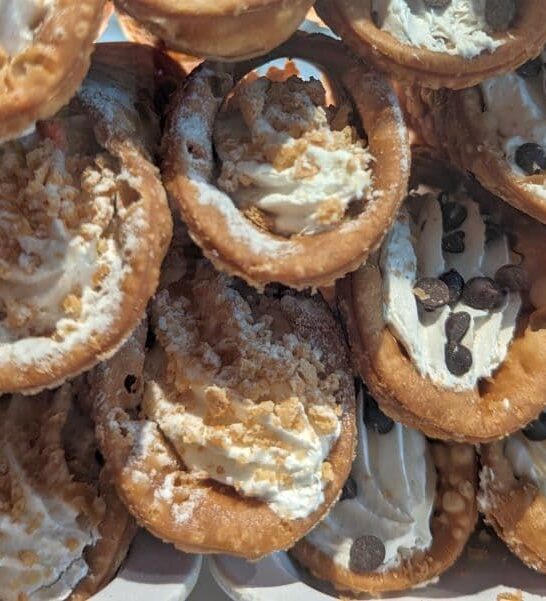
One of the most versatile ingredients in Italian cuisine used to prepare both savory and sweet dishes, ricotta can be found as the filling of ravioli, cannoli, cakes, and a lot more.
This type of soft, creamy dairy product is a whey cheese that can be made from either sheep, goat, or cow milk whey left over from the production of a variety of other types of cheese.
Slightly sweet, the cheese can be quite fatty, depending on the kind of milk used to prepare it.
The aged variety of ricotta has a stronger taste, can often be grated on top of pasta, and can last for several months.
It is one of the oldest types of cheese made in Italy, known to have been made in the country at least since the Bronze Age.
9. Stracchino di Crescenza
Known as stracchino, crescenza, or stracchino di crescenza, this is one of the most delicious types of cheese you will be offered in Italy!
This is a soft kind of cheese, fresh and with a delicate milky flavor, a bit salty and incredibly creamy, made from whole cow’s milk.
This fresh kind of cheese, which can be highly perishable, is excellent inside a sandwich or spread on freshly-baked bread.
10. Provola
One more delicious cheese originating in the Sicily region, provola, is a soft cheese made with whole buffalo milk mixed with milk from cows, although some types of provola can be made just with cow’s milk.
It is one of the many kinds of cheese that can be smoked, something that gives it a unique flavor, making it a perfect addition to a pizza, a hot sandwich, and a myriad of pasta dishes.
The Naples variety of this cheese, known as provolone, has similar characteristics, can also be smoked, and in some Neapolitan caseifici (artisan shops that produce or sell cheese exclusively), is made with a filling of truffles or mushrooms.
Just like mozzarella, both provola and provolone are easy to melt, making them a favorite ingredient in baked or grilled dishes.
11. Taleggio
A semi-soft cheese of antique origins, Taleggio comes from the Val Taleggio, a green valley in the Lombardy region, a few kilometers north of Bergamo.
Dating back at least to the thirteenth century, the cheese was created as a means for the inhabitants of the valley to find a use for the surplus in milk production in the area.
The unique feature that distinguishes Taleggio is that the cheese is ripened in caves spread along the valley.
The cheese became a well-known product from this region and, as time went by, the production extended to other areas around the valley of the River Po.
Today, this raw cheese, very high in fat and with quite a soft texture, can be easily found all over the northern provinces, including Treviso, Bergamo, Brescia, Como, Cremona, Milan, Pavia, and Novara.
12. Burrata
When, in the intro I talked about cheese with a cheese filling, I was certainly thinking about burrata.
This unique cheese variety comes from the region of Campania.
It is a very soft cheese that is made from cow’s milk and covered by an outer shell of mozzarella which, even being soft, is much harder than burrata and manages to contain the fresh curd filling that often resembles a thick, juicy cream.
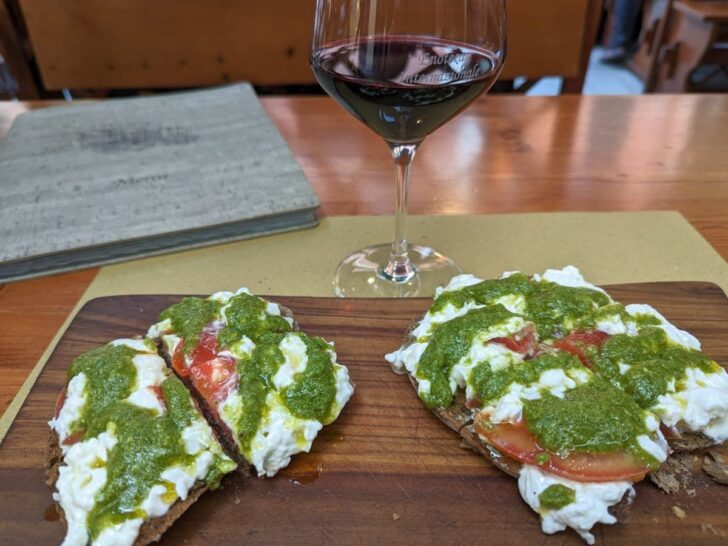
Burrata is excellent on its own but can also be used in salads or as the main filling of a thin focaccia or a fanciful panino.
13. Mascarpone
One of the key ingredients of tiramisu, the beloved Italian dessert, is mascarpone, a very creamy cheese typical of the Lombardy region.
Mascarpone is one of the fattiest types of cheese you can find in Italy. It is very thickened, and is mostly used to make sweets, cakes, and desserts as it has quite a mild and rather neutral flavor.

14. Fontina d’Aosta
Although this cheese variety can be found in several countries around the world, the original Italian fontina comes from the region of Aosta and is made purely from cow’s milk.
Featuring a semi-soft to hard pate with a medium nutty flavor, this cheese has a high fat concentration.
Contrary to popular belief, fontina made in Italy does not have as many holes in the pate as you might imagine.
On the contrary, the pate is quite firm and uniform. The varieties with big holes are the ones produced in Switzerland or Denmark.
This is another quite old cheese variety that has been produced in the Aosta valley, in the Alps, since the twelfth century.
You can distinguish the fontina made in Italy from the fontina produced in other countries by its stronger flavor and the darker, more firm pate.
15. Caprino
Made from whole or skimmed goat’s milk (capra in Italian), caprino is an Italian variety that comes in two different versions: fresh and aged.
While fresh caprino has almost the consistency of a cream and is often preserved in olive oil, the aged or stagionato variety of caprino has a dark color and features a strong, salty, and pungent flavor.
16. Scquacquerone
A staple product from the Emilia Romagna region, this is a tasty, soft kind of cheese perfect for cooking but also incredibly delicious on its own, spread on a piece of bread, or eaten with Italian grissini (bread sticks).
This fresh variety of cheese has no rind and is quite similar to stracchino di Crescenza.
It’s incredibly creamy texture makes it ideal as a pasta filling or in any baked dish.
17. Robiola
This incredibly old variety of cheese can be traced back to the first century!
This soft-ripened cheese, similar to stracchino, comes from the region known as Langhe, in the province of Pavia (Lombardy).
It is produced in Lombardy, Piedmont, and the Aosta Valley, and its taste often changes according to its origin.
The cheese has a soft white pate with a tangy and mildly sour flavor and a fairly high fat content.
Robiola is a delicious cheese to eat on its own or drizzled with a few drops of local honey.
18. Scamorza
A pear-shaped cheese very similar to Campania’s provolone, scamorza is a cheese type made in Scamorza, namely in Apulia, as well as Campania and Molise, that features a semi-soft texture, quite clear in color, similar to dry mozzarella.
Scamorza is often sold as affumicata (smoked), and it is a delicious cheese that melts easily, making it a great ingredient to fill pasta or in baked and grilled dishes and savory pies.
Final Thoughts
As you can see, there are many types of Italian cheese. With this list of the best cheeses in Italy, you can sample some of the best cheeses in the world. Pour a glass of red wine and enjoy!
Save this to Pinterest for later!

More European Foods to Try
15 Italian Desserts You Should Try!
25 Greek Desserts You Should Try!
Best Carbonara in Rome (+ Easy Carbonara Recipe)
What to Eat in Rome (Best Foods to Try)
Dining in Italy (Tips and Info)
Italy Travel Itineraries and Places to Visit
Guide to Cinque Terre (+Where to Stay)
10 Best Things to Do in Florence
7 Best Day Trips from Florence
Guide to Venice (Where to Stay + Things to Do)
15 Best Beach Towns in Italy (+Where to Stay!)
10 Best Hiking Trails in Italy
About the Author

Gabi Ancarola is a translator and travel journalist living in Crete. She regularly writes about Europe for several magazines about travel, gastronomy, and hospitality. She has published several travel guides about Greece and plans customized trips to the Greek islands. She loves cooking local dishes, taking photos, and driving on the mountain roads of Crete.