
One of the most popular summer European escapes, Greece, has the perfect combination of activities for an outstanding week in the Mediterranean. Pairing pristine shores and crystal-clear seas but also mountainous landscapes, outdoor sports, and dozens of the most important archaeological sites and museums in the world, Greece ticks every box when planning a varied and thrilling vacation.
In this article, I propose you a 7-day itinerary of Greece visiting three of the most classic and popular places in the country.
You will spend a few days in the capital, Athens, and explore the enchanting scenario of two of its most popular islands, Mykonos and Santorini. Enjoy!
This post may contain affiliate links and Solo Trips and Tips may receive a commission for purchases made through links. See our disclosure about affiliate links
Explore This Guide:
Basic Information about Greece
Known as one of the best destinations in the Mediterranean, Greece is located on the southernmost portion of Europe.
Boasting a landscape that is almost entirely mountainous, Greece is a beloved destination for hikers in summer as well as an original place to visit in winter if you’re keen on skiing. This often comes as a surprise to those used to thinking Greece is a beach destination.
This also means that the country features not only high peaks but incredible valleys, breathtaking gorges, and beautiful mountain lakes and rivers as well.
And yes, the country also features the most extensive coastline in the Mediterranean Basin—more than 13,600 kilometers (8,450 miles) of perfectly pristine shores.
Greece occupies a peninsular territory and is home to an archipelago of about 3,000 islands, of which just a bit more than two hundred are inhabited.
The language spoken in the county is Greek, often described as one of the hardest languages to read and speak; however, due to its developed tourist industry, several languages are also spoken in most cities and towns, including English but also French, Italian, and German.
The currency used is the Euro, as in the rest of Europe.
When it comes to food and wine, Greece’s cuisine finds its most ancient roots in the Mediterranean diet.
This is characterized as a healthy cuisine with abundant seasonal products, lots of vegetables, and staple ingredients such as the super healthy and delicious extra virgin olive oil.
Greece is the third largest olive oil producer in Europe, right after Spain and Italy.
Getting to Greece
Most people get to Greece via air travel, but also by ferry or cruise ships.
Athens’ International Airport, Eleftherios Venizelos, receives flights from all over the world.
The country can also be reached with seasonal charter flights from other European cities, especially in summer.
Many of those flights take tourists directly to the most important islands without the need to get to Athens.
Another important airport is located in the northern city of Thessaloniki, Greece’s fourth-most important town.
It is also possible to travel to Greece by ferry (from Italy) or to visit the most important islands with a cruise.
Traveling in Greece
To move around the most important cities, you can rely on Greece’s efficient public transport system, including buses and metro.
Taxis can also be affordable and quite convenient especially if traveling at night.
Although driving in Athens can be difficult because of the usual heavy traffic, renting a car when visiting the islands is a convenient way to see many off-the-beaten-track gems that you would otherwise miss, especially when visiting smaller islands with limited public transport systems.
To travel between the islands, it’s sometimes possible to rely on domestic flights if you’re visiting islands that do have an airport; however that’s not the case with several small islands that can only be reached by boat.
Traditionally, the inhabitants of the islands have relied on sea travel to move from one place to the other.
And following this tradition, island-hoping by ferry is today one of the most popular and affordable ways to move from one island to the other when exploring Greece.
The most important port in the country, the Piraeus Port, is located about 30 minutes from the center of Athens and is the main gateway to most Greek islands.
Classic Itinerary: 7 Days in Greece
This is one of the most traditional itineraries that you can come up with when planning your first Greek vacation.
And although there might be islands that are more affordable, less crowded, and even more beautiful, nobody visiting Greece for the first time feels like skipping on Mykonos and Santorini.
Therefore, together with the unmissable streets of Athens, this simple 7-day itinerary takes you to the three most iconic Greek destinations that you can think of. Take a look…
Two Days in Athens
Upon arrival, head directly to Athens city center.
The trip can take from one to two hours depending on traffic conditions and, of course, also on whether you choose to travel by bus (cheaper but slow: €6, bus X95 to Syntagma Square) or metro (faster and more expensive: €9).
Once you get to Syntagma Square and after checking in at your hotel, head to the Acropolis area in order to start your day visiting the most important archaeological site in the country.
LEARN MORE: Travel Guide to Athens (including Where to Stay)
Acropolis Hill
Since this place is often crowded, it’s a good idea to purchase your skip-the-line entrance ticket beforehand in order to avoid queueing.
This Acropolis skip-the-line ticket is good value for money as it also includes a guided explanation of the most important buildings and ruins in the site.
Up on the Acropolis Hill, you’ll be able to admire the imposing Parthenon, as well as the Athena Nike Temple, the Dionysus Theater, and more incredible remains from Classic Greece.
Besides, the views from the Acropolis stretch all the way to the port of Piraeus, offering impressive pictures of how big Athens really is.
Stop for lunch in the nearby area; there are several small restaurants just meters from the Acropolis Museum (probably your next stop); they cater to tourists but offer simple dishes with affordable prices and often the service is fast.

Acropolis Museum
Right after, devote at least 2 hours to explore the Acropolis Museum, one of the most important museums in the world that tells you everything you need to know (and much more) about your former morning visit.
It is also a venue that’s often crowded, so here, booking ahead proves to be the smartest thing to do.
This is a good alternative: a combined ticket granting access to both the Acropolis and the museum.
After both visits you will probably be a bit tired as you’ve already done lots of walking; however, if you’ve packed a comfy pair of walking shoes, you will be able to move on to see some more of this gorgeous town.
Plaka and Anafiotika
Not far from the Acropolis, it is possible to explore two of Athens most charming neighborhoods: Plaka and Anafiotika.
They’re located one next to the other, so it will be an easy stroll just meters from the Acropolis rock.
If after the museum, you’re in the mood for a snack or a cup of coffee, head directly to Plaka. This picturesque Neoclassical area of town, which is mostly pedestrian, is packed with gorgeous bars, cafés, and restaurants where you can sit for a while and enjoy a well-deserved rest.
LEARN MORE: Greek Coffee Culture
Anafiotika, a little hidden behind the main streets of Plaka but still easily accessible on foot, is a magnificent corner of town that looks like a place where time does not go by.
It was built during the last century by inhabitants of the remote Cycladic island of Anafi (hence its name, Anafiotika), following the pattern and architectural style of most Aegean islands.
You will find small whitewashed homes, staircases, and tons of plants as you wander the few, tranquil alleys of this charming neighborhood.
LEARN MORE: 10 Best Day Trips From Athens

Changing of the Guard
Once you’ve checked the whole area, you can take the metro and reach Monastiraki Square or, even better, you can walk along Ermou Street towards Syntagma Square to enjoy a late changing of the guard right in front of the Tomb of the Unknown Soldier at the Greek Parliament.
It’s a good idea to spend some time walking the streets and doing some leisure sightseeing. You can stop for a traditional souvlaki or gyro wrap meal in the area, or even go for a full meal steps from Syntagma at the beautiful and trendy Agia Eirini Square.
Once you’ve checked out the most visited places in Athens, your second day can be more relaxed, especially if you also need to reach Piraeus Port later in the day to board your Mykonos ferry.
Psirri
Devote the day to visit the bohemian quarter of Psirri, just minutes from the center and only steps from Monastiraki.
Over here, you can admire dozens of interesting street art murals and enjoy a stop or two at a local café.
Athens Central Market
Not far from the area, another place worth a visit is Athens Central Market (known as Varvakeios). Here you will be fully surrounded by snapshots of everyday Athenian life, learn about the local food traditions, and even try some Greek delicacies at bargain prices.
Ancient Agora of Athens
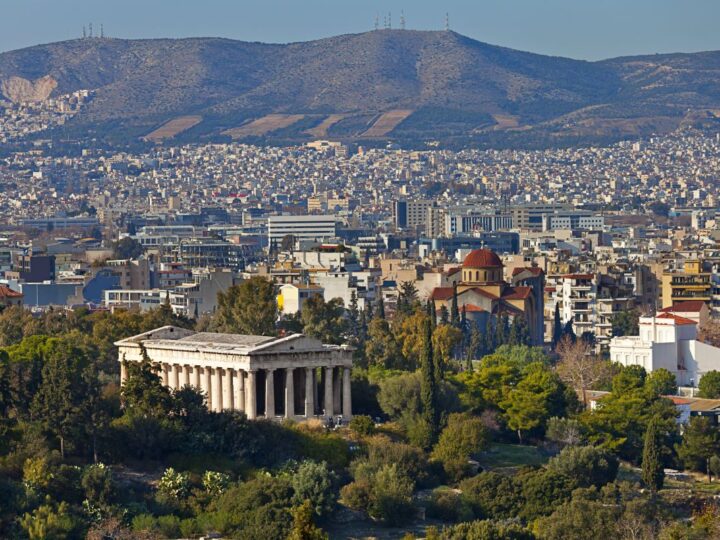
If you still have time available before heading to the port gate to board your ferry, it is a good idea to head back to Monastiraki Square and pay a visit to the nearby Ancient Agora of Athens, where you can admire several monuments as well as a well-preserved ancient temple in honor of God Hephaestus.
Since Monastiraki Metro Station is a good departure point to reach the port (or the airport, if you’re flying), you’ll be in the right place at the right time when it’s time to leave Athens for your next destination.
Two Days in Mykonos
One of the most famous Greek islands, Mykonos is a dreamy Cycladic destination filled with traditional whitewashed houses, beautiful cobblestone alleys, and picturesque windmills.
LEARN MORE: Travel Guide to Mykonos (including Where to Stay)
Mykonos Beaches
However, there’s more to Mykonos than that postcard image. The island is home to some of the best beaches in Greece, and it also hosts a couple of very interesting museums!
Upon disembarking, grab a taxi in order to head to your accommodation and check in. Since your time on the island will be limited, head straight to the beach.
Although this will depend a lot on where your hotel is situated, some of the best beaches in Mykonos are Platys Gialos (an area with many good and affordable hotels), Ornos (another good place to stay in Mykonos, although prices can be higher).
Other beaches in Mykonos include Psarou Beach, Paraga Beach, Elia Beach, Agios Ioannis Beach, Paradise Beach, and Super Paradise Beach.
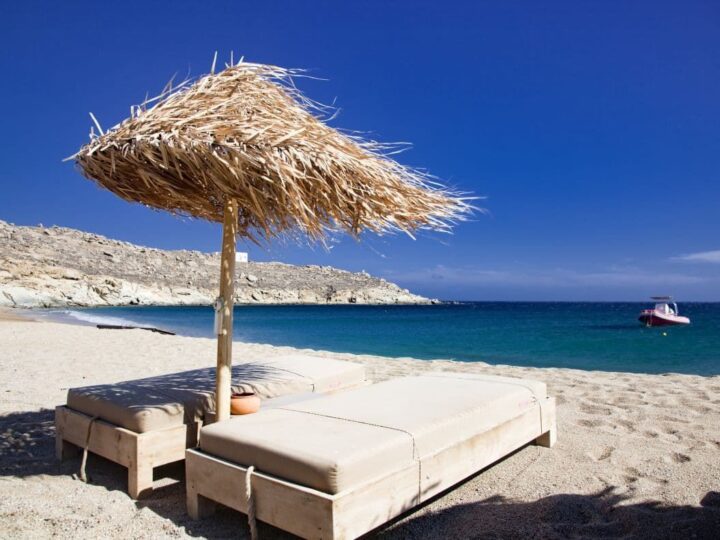
No matter which of these beaches you choose, be certain that you will enjoy a few relaxing hours, swimming in crystal clear waters or sunbathing on the golden sands of the island.
Mykonos Town
A good alternative for the afternoon is to reach the old town known as Mykonos Town at around 5 or 6 pm in order to stroll along the whitewashed alleys, take pretty pictures and then head right to the port before sunset.
The neighborhood known as Alefkandra or Little Venice is great for a stroll in order to visit the church of Paraportiani, one of the most iconic views on the island.
Right after, you can have a drink facing the sea sitting at one of the many bars and pubs that populate the waterfront. Have your camera ready, sunsets in this point of town are simply incredible.
Mykonos Windmills
Another great place to capture the sunset by the sea is right where the windmills are located, a few steps from Mykonos Old Port.
Both the windmills and Little Venice are just a short walk from each other, so any place you choose guarantees excellent snapshots.

Dinner in Mykonos Town
For a good and yet affordable dinner, it’s better to head to the backstreets of Mykonos Town since a dinner by the sea can be really expensive. If your budget is more flexible, why not enjoy dinner overlooking the sea!
If you’re on a budget, head to the edge of the old town to the area known as Fabrika (here is where most buses depart from).
There are a few fast food joints that serve good meat and Greek salads for quite affordable fees.
Photos, Beaches, Archaeological Sites
Your second day in Mykonos will depend on your interests. I personally love to get up early and wander the streets of the old town whenever visiting a Greek island in order to get the best pictures and avoid the crowds.
Delos Island
But if you’re not an early bird or if you’re not into photography, then head to the beach or take a day cruise to the nearby island of Delos, one of the biggest archaeological sites in the Aegean.
Although this plan might sound perfect for a history geek, beach lovers might enjoy finding a good shore and spending the day by the sea.
Elia Beach is a good shore on the island; it is one of the widest beaches with stunning turquoise waters and soft sand.
Although the beach is not close to the city center, it is easy to reach by boat, bus, or even by motorcycle or rental car.
The beach is gay and naturism-friendly, and it is really one of the most beautiful places where you can spend a long, tranquil day by the beach.
The area is organized and there are umbrellas and loungers available for rent.
Keep in mind that Mykonos is a fairly expensive island when compared to other Greek destinations, so if you’re a budget traveler, pack a generous lunch and a few drinks instead of buying food or snacks at the beach. You will save quite a few euros.

Mykonos Night Life
You can pick one of the many discos or clubs in town for a fun night out; however, if you have an early ferry to catch to reach your next destination, it’s maybe a good idea to get back to your hotel early.
Do spend some time at Mykonos Town in the afternoon to check souvenir shops or visit the Folklore Museum and learn a little bit about the island. Do enjoy a drink or two, but try not to make it a late night.
Taxis in Mykonos
Remember: There is a shortage of taxis and public transport on the island, book your transfer to the port or airport at least one day before the departure to make sure you won’t be stranded waiting for a taxi when it’s time to leave.
Not everyone knows this, but there are really just a few taxis available on the island.
Your hotel can help you book a transfer or you can check out this transfer service.
Two Days in Santorini
It’s time to visit one of the most beautiful destinations in Greece, and certainly the most popular one: Santorini.
Get your camera ready or keep your eyes wide open; chances are you will fall in love with the island!
If you’re getting to Santorini with the ferry, you’ll be reaching the port of Athinos, not far from the capital of the island, Fira.
And if you get there by plane, a taxi to the center of town will be more affordable than in Mykonos (about €30).
Once your check in has been sorted out, head out and start walking, because—let’s face it—on the next two days you will walk a lot!

Fira
The first place you will want to visit on the island is the capital, Fira. Overcrowded and not as delightful as the northern village of Oia, Fira is still a gorgeous town facing the volcano, perched on top of a hill.
In Fira you will find amazing churches with colorful domes, beautiful whitewashed houses, tons of cute souvenir shops, and fantastic bars facing the sea.

Archaeological Museum
In Fira, you can spend some time visiting the Archaeological Museum (about an hour is enough) or simply enjoy wandering along the maze of cobblestoned alleys.
Both for lunch and dinner, it is a good idea to keep your choices on the backstreets of town.
There are a few good Greek tavernas and some fast food joints (souvlaki and gyro wraps) near the bus station and taxi stand. From here, it is possible to catch a bus that will take you to your second stop on the island, Oia.
Oia
From Fira, after a 40-minute bus ride, Oia will welcome you with one of the prettiest landscapes in the Aegean.
The whitewashed village sits on the northernmost tip of the island, and visiting in the afternoon will give you plenty of time to both stroll along the alleys and witness one of the most iconic sunsets in Greece.
Reach your sunset spot early, as it tends to be extremely crowded. I always recommend catching the sunset from the abandoned castle of Oia.
But head there at least one hour before the sun goes down so as to get a better position.

Perissa
On your second day, wake up early and take the bus or a taxi to visit Perissa, the famous black sand beach on the southern area of the island.
You can spend a few hours in the area, enjoy a traditional Greek meal by the sea, and swim or simply spend some lazy hours by the sea.
Akrotiri Archaeological Site
Dedicate the afternoon to explore the Archaeological Site of Akrotiri, which is located about 25 minutes from Perissa (taxi, car, or bus).
During the visit you can explore the ruins of what is supposed to have been a very advanced civilization that lived on the island right before the tragic volcanic eruption that buried the settlement.
The volcanic ashes preserved the ruins in excellent condition, so much of the old town is visible.
Red Beach
Right after Akrotiri, you can walk to the Red Beach, one of the most unique sights on the island.
To reach the coast it’s necessary to hike down a rocky mountain path, but the views are spectacular.
This beach is a great place for snorkeling as the volcanic activity has shaped the submarine bed with unique rock and lava formations.
Akrotiri is also a perfect stop for sunset, second only to Oia in terms of landscapes and beauty.
One Last Day in Athens
Once you get back to Athens from the island, you can devote at least a part of your last day in the country doing some shopping in the most authentic flea market in town.
After disembarking your ferry and before boarding the bus or the metro to reach Athens Airport, it is a good idea to head to Monastiraki Square and hunt for great bargains.
Taking with you an original memento can be a rewarding experience, so avoid purchasing fridge magnets or kitsch postcards and focus on getting an ancient book, folk CDs, vintage posters, and original artisan clothes to take back home from Greece.
Final Thoughts
Whether you choose to relax under the sun, soak in the views, explore off-the-beaten-path landscapes, or get lost in the culture and history of this magnificent country, a week well spent in Greece will leave unforgettable memories from one of the finest countries in the Mediterranean.
Save this to Pinterest for later!

More Places to See in Greece
Top 10 Best Things to Do in Rhodes
16 Best Beaches to Visit in Greece
Travel Guide to Crete (including Where to Stay)
10 Best Islands to Visit in Greece
Tips for Planning a Trip to Greece
When is the Best Time to Visit Greece?
Do’s and Don’ts of Dining in Greece
Coffee Culture in Greece – Learn the Basics
What to Eat in Greece – the Best Foods to Try
Athens Travel Guide (including Where to Stay)
About the Author

Gabi Ancarola is a translator and travel journalist living in Crete. She regularly writes about Europe for several magazines about travel, gastronomy, and hospitality. She has published several travel guides about Greece and plans customized trips to the Greek islands. She loves cooking local dishes, taking photos, and driving on the mountain roads of Crete.